Programme Development
Getting started with Programme Development
Programme Development at Cardiff University is a comprehensive and iterative process, designed to ensure that students receive high-quality learning experiences that are academically rigorous, coherent, and aligned with national standards. The design and delivery of a programme are underpinned by the principle that learning is a cumulative journey: students’ progress through levels of study in a manner that scaffolds knowledge, skills, and attributes, culminating in the attainment of Programme Learning Outcomes (PLOs) and Graduate Attributes (GAs). In this sense, programme structure is not merely an administrative arrangement but a pedagogical framework through which the University operationalises its educational mission.

At the heart of programme design is the notion of constructive alignment, which asserts that teaching, learning activities, and assessment must all be deliberately aligned to the intended learning outcomes (Biggs and Tang, 2011). In practice, this means that programme aims, module content, and assessment tasks are developed concurrently, with each element reinforcing the others. Constructive alignment ensures that students are consistently guided toward demonstrable achievements, whether acquiring foundational knowledge at early stages or engaging in complex, independent analysis at advanced levels.
1.Programme Structure, Design and Delivery: The Stages of Programme Development
Governance and Quality Assurance
All programme structures and designs are subject to rigorous governance and quality assurance, being formally validated by the Programme Approval and Revalidation Sub-Committee PARSC and the Academic Standards and Quality Committee (ASQC). This ensures that proposals meet institutional standards, adhere to FHEQ descriptors, and align with sector benchmarks. Internal and external review processes, including the scrutiny by external examiners and mapping to Professional, Statutory and Regulatory bodies (PSRBs) requirements (where relevant), provide assurance that programmes are academically rigorous, coherent, and comparable with UK standards. This systematic approach safeguards both the student experience and the integrity of Cardiff University awards.
Cardiff University’s programme development process is formally structured into three stages: In Principle Approval, Design and Documentation, and Final Approval and Implementation. Each stage serves a distinct purpose, balancing strategic considerations, academic quality, and practical feasibility.
Stage 1, following Programme Scoping, is ‘In Principle Approval’, and focuses on the strategic justification for a new or revised programme. Here, programme teams articulate the rationale for the programme, demonstrating alignment with institutional priorities, anticipated student demand, and academic and professional relevance. This stage requires consideration of resources, staffing, market positioning, and sustainability. The approval ensures that the programme represents a viable investment of time and resources before detailed design work begins. You can find out more on the Programme Scoping section of this toolkit page.
The second stage, Programme Development: Design and Documentation, represents the core of programme development. Programme teams construct detailed documentation, including the Programme Information Template, assessment maps, and module descriptors. Programme Learning Outcomes (PLOs) are drafted and mapped against Graduate Attributes, while module learning outcomes and intended assessments are carefully aligned to ensure coherence and progression across levels. Decisions regarding programme structure, module sequencing, and core versus optional content are made in light of academic, pedagogical, and regulatory requirements. Importantly, this stage also involves planning for inclusivity, accessibility, and the student experience, embedding considerations of transition, engagement, and active learning into the programme’s architecture.
Final Approval and Implementation is the stage at which the programme is formally validated by Programme Approval and Revalidation Sub-Committee (PARSC) and the Academic Standards and Quality Committee (ASQC). At this point, the programme’s structure, learning outcomes, assessment strategy, and delivery methods are formally approved, and the programme is prepared for operational implementation by Registry. This stage ensures that all elements comply with Cardiff University regulations and the Framework for Higher Education Qualifications (FHEQ), safeguarding the integrity and comparability of the award.
Protecting Award Integrity and Mapping FHEQ Levels
A central concern in programme design is the protection of award integrity. Programme and module learning outcomes must be clearly articulated at the appropriate FHEQ level, specifying the knowledge, skills, and capabilities students are expected to achieve. The FHEQ provides generic descriptors for each level of study, setting overarching principles that guide both programme-level outcomes and assessment standards (QAA, 2024).
Mapping learning outcomes across levels ensures that students can progress through increasingly sophisticated cognitive and practical challenges. Level 4 modules typically emphasise foundational knowledge and understanding, Level 5 modules develop application and analytical skills, while Level 6 or postgraduate modules demand critical evaluation, synthesis, and independent research. This scaffolded progression is critical for maintaining academic standards and preparing students for professional and postgraduate opportunities
Transition and student voice are central considerations. Induction processes, early formative assessments, and structured feedback opportunities ensure that students can navigate the programme successfully. You can read more about transition in this Student Transition Sharepoint site.
Ongoing engagement with student representatives and evaluation and feedback mechanisms ensures that programmes remain responsive, relevant, and effective in meeting learner needs. You can read more about Student Engagement on the Student Engagement Intranet page.
Integration with Graduate Attributes
While modules are the primary vehicle for learning, the programme-level design ensures that Graduate Attributes are embedded across the student experience. Collaborative, reflective, ethically aware, and innovative practice is cultivated not only through explicit learning activities but also through programme structure, sequencing, and assessment design. By integrating Graduate Attributes with disciplinary content, programmes produce graduates who are not only academically competent but also professionally capable and socially responsible.
Conclusion
The design, structure, and delivery of programmes at Cardiff University are deliberate, coherent, and student-centred. From the initial rationale through to final approval and implementation, programme design integrates disciplinary knowledge, Graduate Attributes, inclusivity, sustainability, and assessment alignment. The visible core spine, careful module sequencing, and mapped outcomes ensure that students progress through a scaffolded, coherent curriculum. By embedding Constructive Alignment, fostering authentic learning experiences, and promoting reflective, independent, and socially responsible graduates, Cardiff University ensures that every programme delivers high-quality, internationally recognised, and professionally relevant education.
2.Programme Learning Outcomes and Graduate Attributes
Designing a programme of study is fundamentally about defining the capabilities students should demonstrate upon graduation. At Cardiff University, this is articulated through Programme Learning Outcomes (PLOs), which set the standard for what students are expected to know, understand, and be able to do by the end of their programme. PLOs are not merely statements of knowledge acquisition; they encompass the intellectual, practical, and transferable skills that constitute a graduate’s holistic profile.
PLOs provide the foundational framework around which curricula are constructed, offering clarity to students, staff, and external stakeholders such as accrediting bodies and employers. They inform teaching strategies, assessment design, and programme evaluation, ensuring that the programme remains coherent, progressive, and aligned with both institutional priorities and national standards (Biggs and Tang, 2011; Purvis and Winwood, 2023).
The Function of Learning Outcomes in Programme Design
PLOs serve as the primary reference point in a backward-design approach, which begins with the end in mind. This approach ensures that every module, activity, and assessment within the programme contributes meaningfully to the intended outcomes, a principle rooted in constructive alignment theory (Biggs, 1996). At Cardiff, programme teams are encouraged to start with the graduate profile and work backwards to define module learning outcomes (MLOs), learning activities, and assessment strategies that collectively enable students to meet those outcomes.
Constructive alignment reinforces the coherence of the learning journey, ensuring that students’ learning experiences are purposeful and cumulative. For instance, introductory modules may focus on foundational knowledge, mid-level modules emphasise application and analysis, and capstone projects integrate synthesis and innovation. By structuring learning in this progressive manner, programmes cultivate deep understanding and skill development, in line with FHEQ level descriptors, which define expectations of complexity, autonomy, and intellectual sophistication at each level (QAA, 2024) (qaa.ac.uk).
Categorising Programme Learning Outcomes
Cardiff University classifies PLOs into four principal domains: Knowledge and Understanding (KU), Intellectual Skills (IS), Professional/Practical Skills (PS), and Transferable or Key Skills (KS). This framework provides a holistic structure that balances disciplinary knowledge with skills essential for employment and civic engagement.
Knowledge and Understanding outcomes describe the disciplinary content students are expected to grasp. Intellectual Skills encompass analysis, evaluation, and problem-solving, reflecting students’ capacity to engage critically with information and evidence. Professional or Practical Skills relate to the application of disciplinary knowledge in professional or authentic contexts, while Transferable Skills cover communication, collaboration, reflection, and self-management, ensuring graduates are adaptable and resilient.
Graduate Attributes as the Integrating Thread
Integral to Cardiff’s curriculum design philosophy is the development of Graduate Attributes (GAs), which act as a “golden thread” running through the student experience. These attributes—Collaborative, Effective Communicators, Ethically, Socially and Environmentally Aware, Independent and Critical Thinkers, Innovative and Enterprising, Reflective and Resilient—were designed in collaboration with students, academics, and employers, to reflect the capabilities graduates need in their personal, professional, and societal lives.
Graduate Attributes are not treated as supplementary; rather, they are embedded into every aspect of the curriculum. For example, a module in environmental policy may develop ethical and social awareness through critical analysis of case studies, foster innovation through policy design exercises, and cultivate communication skills through group presentations. By intentionally linking Programme Learning Outcomes to Graduate Attributes, programme designers ensure that students are not only academically competent but also equipped with the competencies expected by employers and professional bodies.
Operationalising the Alignment Between PLOs and Graduate Attributes
The operationalisation of this alignment occurs through tools such as the Graduate Attributes , which allows students and staff to visualise the connections between specific modules, PLOs, and the attributes they foster. By engaging with the map, students can see how the progression of modules develops both their subject expertise and transferable capabilities, supporting reflective learning and personal development planning.
The Cardiff University Graduate Attributes are:
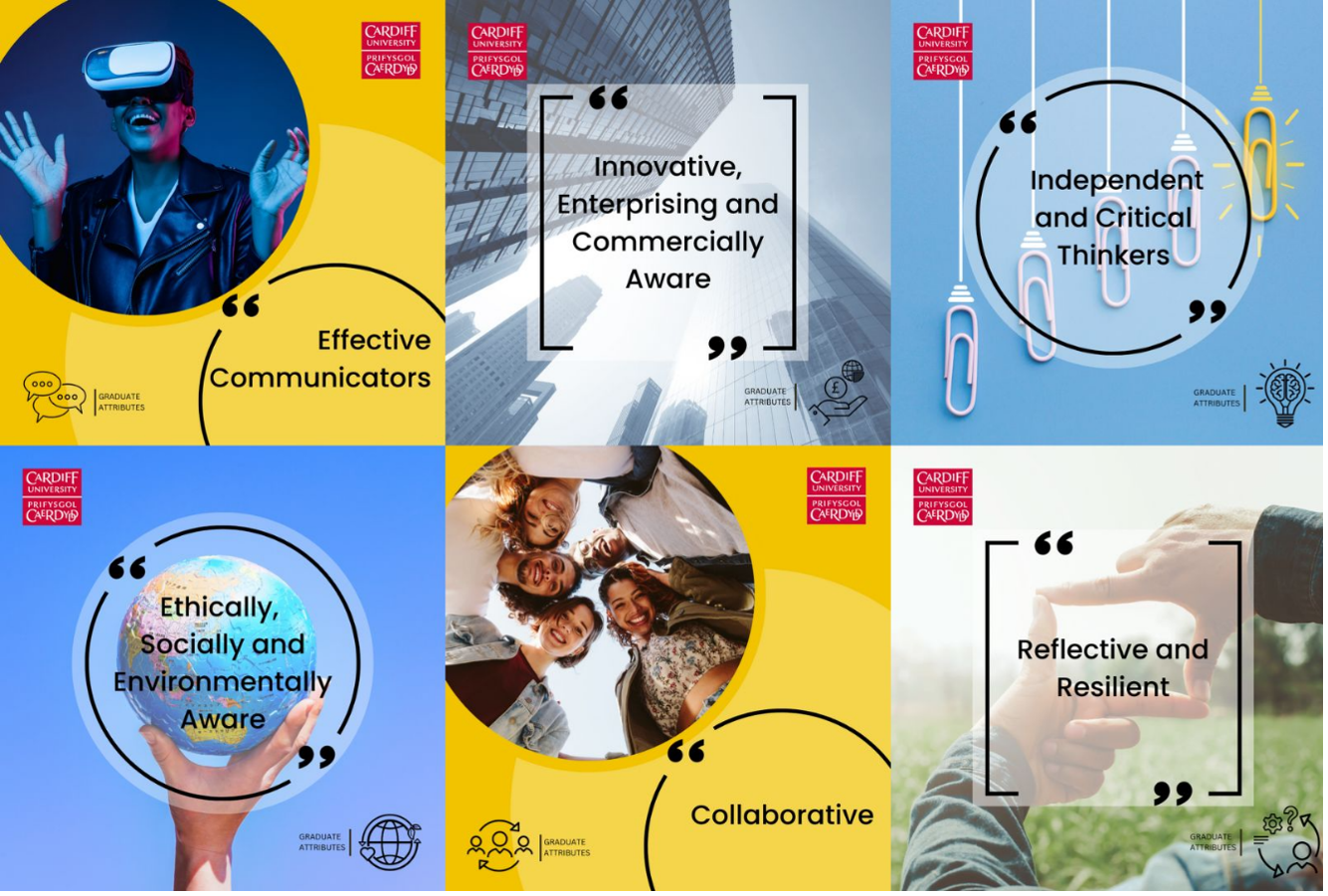
Moreover, embedding reflection activities, portfolios, and formative assessments into modules enables students to articulate how their learning experiences contribute to achieving both PLOs and GAs. This approach not only promotes metacognition but also enhances students’ agency, allowing them to take ownership of their developmental journey.
Ensuring Coherence and Progression
A coherent programme structure requires careful consideration of how learning outcomes develop across levels. At Level 4, students may be expected to demonstrate foundational knowledge and basic analytical and evaluative skills. By Level 6 or 7, outcomes should reflect more comprehensive higher-order cognitive skills such as critical evaluation, synthesis, and independent problem-solving, aligned with the FHEQ and Cardiff’s internal expectations (QAA, 2024).
This scaffolding ensures that students develop mastery incrementally, with opportunities to consolidate skills and knowledge before tackling complex integrative tasks. Narrative examples within modules reinforce this progression: introductory lectures provide theoretical foundations, seminar discussions promote critical thinking, laboratory or fieldwork enables practical application, and capstone projects demand synthesis, innovation, and reflection.
Alignment with Quality Assurance and Benchmarking
While Cardiff defines its PLOs and GAs in alignment with institutional priorities, they are also benchmarked against Quality Assurance Agency (QAA) Subject Benchmark Statements, which outline sector-wide expectations for knowledge, skills, and competencies in specific disciplines. Aligning PLOs with these external statements ensures that the programme is consistent with UK academic standards, facilitating comparability and external validation (QAA, 2024).
The Programme Information Template acts as the formal document capturing these outcomes alongside teaching, learning, and assessment strategies. It functions both as a tool for internal coherence and as a transparent guide for students and external stakeholders, demonstrating how the programme meets regulatory, professional, and pedagogical expectations (QAA, 2024).
Inclusivity and Equity in Learning Outcomes
A critical dimension in developing PLOs is ensuring that they are inclusive and accessible. This aligns with Cardiff’s Inclusive Education Framework, which emphasises fairness, equity, and the accommodation of diverse learning needs. Outcomes should be expressed in language that is clear and unambiguous, accessible to students from different backgrounds, and designed to allow multiple pathways to achievement. Embedding inclusivity ensures that students with varying abilities, prior experiences, and identities can engage meaningfully with the curriculum. You can find out more on the Inclusivity toolkit pages.
When designing Programme Learning Outcomes (PLOs), you are creating the conditions by which all students will be assessed, whatever their dimensions of diversity or characteristics. It is therefore essential that you identify the competence standards of the programme, and the academic standards, and that you write your learning outcomes in such a way that maximises flexibility, choice and equity in your assessments, to avoid unintended institutionalised discrimination.
Check that your learning outcomes don’t inadvertently exclude students for reasons that aren’t strictly necessary. They should therefore relate to the programme or disciplinary area competence standards. For example, if you require students to demonstrate specific skills in literacy, social aptitude, communication or manual dexterity, some of your learners may be at a disadvantage. Some of these will be essential competence standards for your programme, but otherwise, it may be possible to design out these requirements, or alternatively, make individual adjustments for some learners.
Writing inclusive Programme Learning Outcomes ensures all students can demonstrate what they know, or can do, to enable them to meet the learning outcomes to their potential. This useful video from the Bologna Agreement group explains more.
The new Universal Design for Learning Guidance can also help us frame our Programme Learning Outcomes, particularly in relation to Multiple Means of action and expression, as learners differ in the ways they navigate a learning environment, approach the learning process, and express what they know. Click on the heading for prompts for reflection during the design process, or visit our Universal Design for Learning page for more information.
Multiple Means of Action and Expression for Programme Learning Outcomes
It is essential to design for varying forms of action and expression. For example, all individuals approach learning tasks very differently, and may prefer to express themselves in written text but not speech, and vice versa. It may not always be feasible to build in multiple options or choices for every activity or assessment, if a competence standard must be reached, but there should be diversity in assessment mode, as far as possible.
It should also be recognised that action and expression require a great deal of strategy, practice, and organisation, and this is another area in which learners will differ. In reality, there is not one means of action and expression that will be optimal for every learner; options for action and expression are essential.
Think about how learners are expected to act and express themselves. Design options that:
- Enable variety in interactions in responses, navigation, and movement, and enable options in interactions using accessible materials and assistive and accessible technologies and tools
- Provide options and flexibility for students in the expression and communication of their learning, through multiple media and multiple tools for construction, composition, and creativity, challenging exclusionary practices
- Build fluencies with graduated support for practice and performance, addressing biases related to modes of expression and communication
- Support students in strategy development and the setting of meaningful goals, enabling students to anticipate and plan for challenges and organise information and resources
Reflection: Do you design for:
- Choice or flexibility in responses, interactions, activities and collaborations within sessions?
- A range of accessible resources, tools and technologies for expression of learning
- Choice or flexibility in the mode students can demonstrate their knowledge or skills, such as written, spoken or multi-media?
- Scaffolded support for students to demonstrate essential skills in a particular mode, for example practice runs, formative tasks and clear criteria for skills as well as content?
- Support for goal setting, strategic planning, time-management and management of information, such as module and assessment maps, session plans and summaries of information resources?
PLOs and Reasonable Adjustments
You have a responsibility to clearly define the competence standards for the programme, before writing the PLOs, to ensure that students with Reasonable Adjustments for assessments under the Equality Act provisions for disabled students can achieve. Reasonable adjustments cannot compromise the competence standards of programmes or modules, as the Equality Act places no duty to make a reasonable adjustment to a competence standard. A competence standard is ‘an academic, medical, or other standard, applied for the purpose of determining whether a person has a particular level of competence or ability’. A competence standard must apply equally to all students, be genuinely relevant to the programme, and be a proportionate means to achieving a legitimate aim.
There is a duty to make reasonable adjustments to the way in which a competence standard is assessed so that disabled students are not disadvantaged as a result of their disability. Reasonable adjustments must not affect the validity or reliability of the assessment outcomes. However, they may involve, for example, changing the usual assessment arrangements or method, adapting assessment materials, providing a scribe or reader in the assessment, or re-organising the assessment environment.
More guidance and the Policy and Procedure for Reasonable Adjustments for Disabled Students can be found on the Cardiff University intranet . There have been recent legal developments in this area in 2024, with guidance produced by the Disabled Students Commission (which have been adopted by Cardiff University): it is recommended that you read this before writing your PLOs
Creating Inclusive Learning Outcomes: A worked example:
To give an example, consider this learning outcome:
- Analyse the relationship between the language of satire and literary form by the close examination of a selected number of eighteenth-century texts in a written essay.
You would firstly decide if a written essay is a competence standard for this programme: Is this an essential skill? Could the student demonstrate their learning in another mode, such as an oral presentation?
The EHRC states that universities must ‘ensure that academic staff setting assessments know which aspects of their test are competence standards which must be met, and which aspects are the methods of assessment which may be reasonably adjusted’.
Thus, if it can be justified that a written analysis is a core competence for this programme, then the learning outcome can remain. Otherwise, the performance criteria could be re-phrased to enable multiple modes of action and expression (using the principles of Universal Design for Learning ), with the student being able to complete an oral or written analysis. You might also specify the number of texts, to clarify expectations for students. For example:
- Analyse the relationship between the language of satire and literary form by the close examination of twelve eighteenth-century texts using your preferred mode of submission, from either a recorded oral presentation or a written essay.
To give an example, consider this learning outcome:
- Analyse the relationship between the language of satire and literary form by the close examination of a selected number of eighteenth-century texts in a written essay.
You would firstly decide if a written essay is a competence standard for this programme: Is this an essential skill? Could the student demonstrate their learning in another mode, such as an oral presentation?
The EHRC states that universities must ‘ensure that academic staff setting assessments know which aspects of their test are competence standards which must be met, and which aspects are the methods of assessment which may be reasonably adjusted’.
Thus, if it can be justified that a written analysis is a core competence for this programme, then the learning outcome can remain. Otherwise, the performance criteria could be re-phrased to enable multiple modes of action and expression (using the principles of Universal Design for Learning ), with the student being able to complete an oral or written analysis. You might also specify the number of texts, to clarify expectations for students. For example:
- Analyse the relationship between the language of satire and literary form by the close examination of twelve eighteenth-century texts using your preferred mode of submission, from either a recorded oral presentation or a written essay.
Review and Evaluation of Learning Outcomes
PLOs are not static; they require ongoing monitoring and review to ensure continued relevance and effectiveness. Cardiff University embeds PLO evaluation into its Programme Approval and Revalidation cycles, where feedback from students, external examiners, employers, and academic staff informs iterative refinements. This cyclical review allows programmes to remain current with disciplinary developments, pedagogical innovation, and changes in professional practice, safeguarding the integrity and currency of the award.
Applied Example: A Sustainability Programme
To illustrate, a hypothetical Master’s programme in Sustainability might articulate its PLOs in a narrative format: graduates will critically evaluate environmental challenges in socio-economic contexts, design ethical and evidence-based interventions, and collaborate across disciplines to propose innovative solutions. Across the programme, modules would scaffold these outcomes: foundational modules develop conceptual knowledge, mid-level modules emphasise analytical and evaluative skills, and capstone projects integrate practical, collaborative problem-solving. Graduate Attributes such as Ethical Awareness, Critical Thinking, and Innovation are mapped explicitly throughout, ensuring that each learning experience contributes meaningfully to the intended graduate profile.
Conclusion
Programme Learning Outcomes and Graduate Attributes at Cardiff University function as the backbone of curriculum design, ensuring that every element of the learning journey is purposeful, coherent, and aligned with institutional and national expectations. By embedding progression, inclusivity and sustainability, and reflective opportunities, programmes cultivate graduates who are not only knowledgeable but also capable, adaptable, and socially responsible. The integration of PLOs and GAs ensures that the student experience is holistic, transparent, and empowering, preparing graduates to thrive in both professional and civic contexts (Biggs and Tang, 2011; Purvis and Winwood, 2023).
3.Assessment Planning, Design and Delivery
Assessment is the cornerstone of any academic programme, serving as both a measure of student achievement and a driver of learning. At Cardiff University, assessment is understood not simply as a mechanism for awarding grades, but as a strategic, integral component of curriculum design, assessment as learning, that shapes the student experience, fosters the development of Graduate Attributes, and maintains the integrity and comparability of qualifications across the sector. You can find our more detail about assessment on the Cardiff University Toolkit Inclusive Assessment page.
The Role of Assessment in Learning
In higher education, assessment functions across three overlapping roles. Firstly, assessment of learning certifies student achievement and supports progression decisions, serving summative purposes aligned with programme-level outcomes (Biggs and Tang, 2011). Secondly, assessment for learning provides formative feedback that guides students’ ongoing development, helping them identify strengths and areas for improvement. Thirdly, assessment as learning encourages students to engage in metacognition, reflecting on their own learning processes, enhancing self-regulation, and preparing them for professional practice and lifelong learning (Boud and Falchikov, 2006).
This conceptual framework emphasises that effective assessment is not an adjunct to teaching, but a central mechanism through which learning is constructed, consolidated, and evidenced. The alignment between Programme Learning Outcomes (PLOs), Module Learning Outcomes (MLOs), and assessment methods is therefore paramount, ensuring coherence between what is taught, how it is learned, and how achievement is demonstrated (Biggs and Tang 2011).
Constructive Alignment in Assessment Design
Cardiff University’s approach to assessment is firmly rooted in constructive alignment, whereby the design of assessment tasks reflects both the intended outcomes of the programme and the methods of teaching and learning. This alignment ensures that students are evaluated on what they are expected to learn, rather than on peripheral skills or content. For example, if a PLO requires graduates to critically evaluate evidence in a disciplinary context, assessment tasks must provide opportunities to demonstrate this skill, whether through written analyses, case study evaluations, or applied research projects.

Constructive alignment also supports progressive development across levels. This scaffolded approach ensures that assessment strategies nurture increasingly sophisticated capabilities in tandem with cognitive and professional growth (QAA, 2024) (qaa.ac.uk).
Designing for Authenticity and Relevance
A central principle of Cardiff’s assessment philosophy is authenticity. Assessments are designed to reflect real-world challenges and professional practice, bridging the gap between academic learning and employability. Authentic assessment might include the preparation of reports, policy briefs, professional portfolios, laboratory experiments, or business proposals, each aligned with the discipline-specific skills and the Graduate Attributes that the programme seeks to develop.
Authentic tasks foster engagement and motivation, requiring students to navigate complexity, uncertainty, and interdisciplinary contexts, thereby preparing them for the demands of the workplace. Importantly, authentic assessment also encourages creativity and reflective practice, as students must justify their decisions, evaluate outcomes, and consider ethical and societal implications (Harden, 2001).
Inclusivity, Accessibility, and Equity
Assessment design must be inclusive and equitable, accommodating the diversity of student backgrounds, learning preferences, and abilities. Cardiff University’s commitment to Inclusive Education and the principles of Universal Design for Learning (UDL) ensures that assessments provide multiple ways for students to demonstrate achievement. This might include offering alternative formats for presentations, written work, or digital artefacts, while maintaining rigorous standards.
Inclusivity also extends to the clarity of instructions, transparency of marking criteria, and the provision of timely and constructive feedback. Assessments are structured to avoid bias and disadvantage, and consideration is given to the diversity of our students.
Inclusive Assessment Strategy Considerations
In the Inclusive Education Framework Enhancement Model (2023), a series of considerations are highlighted for programme teams for assessment and feedback:
| Our programme team ensure that: |
| Our assessment is designed at programme level, giving students a manageable assessment workload and minimising clashes of hand-in dates |
| Our programme uses a range of assessment formats, and enables student personalisation choice of assessment format where appropriate |
| Our students have had an opportunity to practice all final year summative assessment types earlier in the programme, and understand the relationships between assessments at different levels |
| Our assessments are clearly explained to students through module documentation, written materials and activities in class, using transparent and consistent language to make requirements clear |
| Our assessments design out the need for individual alternatives wherever possible (e.g. students given the choice of audio/visual formats so students with hearing/visual impairments do not require individual alternative assessment) |
| Our mark schemes are clearly linked to learning outcomes or competencies to ensure marking is appropriate and consistent with assessment design |
| Our mark schemes do not over-penalise mistakes in written English or referencing conventions |
| Markers’ feedback comments are constructive, and actively point out ways that students can improve their work for future assignments. |
| Markers provide relevant, focussed and timely formative feedback to support student learning |
| Our programme team are sensitive to student anxieties around assessment and feedback, so create a supportive culture around assessment, provide clear guidance, and offer opportunities for students to voice concerns |
Programme-Level Planning and Workload Management
Assessment planning is most effective when considered at the programme level, rather than module by module. This holistic approach ensures an appropriate balance between formative and summative assessments, avoids over-assessment, and distributes workload reasonably across semesters, for both staff and students. Cardiff University recommends the creation of Assessment Maps, which detail the type, weighting, and timing of each assessment across modules and levels. These maps enable programme teams to identify gaps, overlaps, or clustering of deadlines that could unduly burden students or staff.
Programme-level planning also ensures that assessments cumulatively address all PLOs and contribute meaningfully to Graduate Attributes. For instance, group projects, work-based learning placements, and reflective assignments can collectively develop collaboration, ethical awareness, and critical thinking in ways that single modules alone cannot.
Assessment Methodology and Diversity
A rich variety of assessment methods is encouraged to capture the diverse ways in which students can demonstrate learning. Cardiff University supports the use of written assignments, examinations, practical tasks, presentations, portfolios, and digital artefacts, among others. Each method is selected based on its alignment with the intended learning outcome and its capacity to provide valid, reliable evidence of achievement.
Assessment diversity also enhances student engagement and caters to different learning needs. For example, a student who may struggle in timed examinations may excel in project-based tasks that emphasise applied skills and reflective analysis. Where appropriate, programmes can offer students choice in assessment format, provided this does not compromise comparability or standards.
To consider the inclusivity and diversity of your assessments:
Map your assessments to the Programme Learning Outcomes
- Identify any challenges for diversity: are there any particular forms of assessment which are over-represented (for example written vs speech, exam vs coursework)?(see Inclusive Programme Assessment Mapping, below).
Map your assessments by student journey
- Identify: bunching, early and low stakes preparation for assessment types, potential options for adding choice in assessment, and adequate support for new or innovative assessment types. Consider what might be offered as alternative assessments for students with Reasonable Adjustments due to disability, if inclusive design is not available due to competence standards.
Map the socially-constructed nature of your assessments:
- Assessment practices can be created through the use of ‘folk pedagogy’, using unquestioned and habitual forms, which are normalised and can marginalise and exclude certain students for whom such practices are unfamiliar and inaccessible. Analyse your assessments through the lens of Universal Design for Learning and Culturally Sustaining Pedagogy (CSP) (Hanesworth et al. 2019), being aware that we may use familiar practices (such as the domination of the written essay in UK universities), over those more familiar in other countries (such as oral examination or group work). You can read more about this on the Universal Design for Learning and ‘Empowering students to fulfil their potential’
Inclusive Programme Assessment Mapping
To map the inclusivity of assessments on a programme, we need to apply the principles of Universal Design for Learning in enabling students multiple means of action and expression. Identifying the modes of assessment across a programme enables us to analyse the range of different modes of assessment offered, and the potential barriers to attainment for groups of students. If analysed as a colour coded module-based timeline, the dominance and flow of modes of assessment becomes apparent:
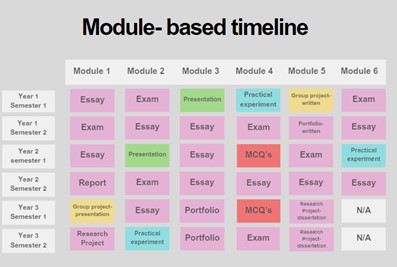
This approach enables us to see in this example that there is a reasonable range of assessment modes across the programme, with some oral, digital and practical forms of assessment. However semester 2 in both year one and year two all use written modes of assessment: dyslexic students, or those with English as an additional language, might find this more challenging. Oral forms of assessment create less barriers to learning than these academic written assessment modes for these students, so a change to one or two of these assessment modes would be more equitable for your diverse students.
In terms of progression, presentations are usefully introduced in the first year before higher-stakes presentation assessments in later years. However MCQs (multiple choice questions) are not introduced in year 1, and the research project of the dissertation could be supported by earlier, smaller research projects in years 1 and/or 2.
Formative Assessment and Feedback
Formative assessment is central to student learning, providing opportunities for practice, reflection, and improvement. Cardiff University emphasises the importance of timely, actionable feedback, which helps students understand their performance relative to assessment criteria and encourages self-regulated learning (Nicol and Macfarlane-Dick, 2006). Feedback should be constructive, specific, and aligned with the learning outcomes, enabling students to make tangible improvements before summative assessments.
Formative opportunities can include draft submissions, peer feedback exercises, digital quizzes, reflective journals, and interactive seminars. Importantly, formative assessment reinforces Graduate Attributes, allowing students to develop collaboration, communication, and critical evaluation skills in a low-stakes environment before being formally assessed.
Assessment Criteria, Marking, and Moderation
Consistency and transparency are critical in assessment. Cardiff University provides generic assessment criteria for each level, ensuring students understand the standards required to achieve a pass, merit, or distinction. Module leaders are responsible for developing task-specific rubrics for subjective assessments, clarifying expectations, and guiding marker consistency.
The University’s Marking and Moderation Policy ensures fairness and equity across modules. Anonymous marking is standard where practicable, and calibration exercises, second marking, and moderation processes are conducted to ensure comparability. External examiners review samples of assessed work, confirming alignment with national standards and providing assurance that assessments are fair and valid.
Technology, Digital Assessment, and AI
Cardiff University recognises the evolving role of technology and artificial intelligence (AI) in assessment. Programmes are encouraged to design tasks that anticipate the responsible use of AI tools, such as requiring students to critique AI-generated content, integrate digital tools into projects, or engage in real-time assessments where AI use is constrained. Clear communication of expectations regarding AI usage is critical, supporting academic integrity while fostering digital literacy and critical engagement with emergent technologies.
Assessment Standards and Pass Marks
Assessment standards reflect both regulatory requirements and pedagogical intent. Minimum pass marks are set at 40% for undergraduate levels (FHEQ Levels 3–6) and 50% for postgraduate levels (FHEQ Level 7), with specific rules governing reassessment, capping, and progression. Modules designated as “critical fail” due to professional or safety implications cannot be condoned, while “compulsory fail” assessments must be passed to progress. These rules safeguard award integrity and ensure that all graduates meet essential academic and professional benchmarks.
Embedding Graduate Attributes Through Assessment
Every assessment offers the opportunity to develop Graduate Attributes. For example, a research report may develop independent thinking, analytical rigor, and ethical reasoning; a group project cultivates collaboration, communication, and resilience. By explicitly mapping assessments to attributes and outcomes, programme teams ensure that assessment is not solely a measurement tool but a vehicle for student development. The Graduate Attributes Mapping Template supports this integration, providing a transparent mechanism for curriculum design and review .
Continuous Review and Enhancement
Assessment strategies are subject to regular review to maintain alignment with programme aims, regulatory requirements, and pedagogical best practice. Student feedback, external examiner reports, and internal quality audits inform iterative improvement, ensuring that assessment remains fair, authentic, and effective. Continuous review also allows programmes to respond to evolving disciplinary expectations, emerging technologies, and new professional standards, preserving both the relevance and credibility of awards (QAA, 2024).
Illustrative Example
Consider a Master’s programme in Data Analytics. Assessments are designed to ensure progression and attribute development. At Level 7, students undertake a capstone project requiring the integration of statistical techniques, ethical consideration of data use, communication of findings to non-specialist audiences, and collaborative engagement with peers. Formative work, such as data preprocessing exercises and draft analyses, supports skill development while offering feedback to refine approach and methodology. Through this carefully structured assessment sequence, students develop subject mastery while simultaneously cultivating Graduate Attributes, including critical thinking, collaboration, and resilience.
Conclusion
Assessment at Cardiff University is not merely a mechanism for awarding grades but a central pillar of programme design and student development. By aligning assessments with Programme Learning Outcomes and Graduate Attributes, embedding inclusivity and accessibility, ensuring formative and summative balance, and adhering to rigorous marking and moderation processes, programmes foster meaningful, authentic learning experiences. In this way, assessment simultaneously certifies achievement, promotes learning, and prepares students to thrive academically, professionally, and personally in complex and dynamic environments.
4.Module Design
Modules are the fundamental building blocks of any higher education programme, representing discrete, coherent units of learning that collectively enable students to achieve Programme Learning Outcomes (PLOs) and develop Graduate Attributes (GAs). At Cardiff University, module design is approached holistically, integrating content, pedagogy, assessment, and skill development in a manner that reflects institutional priorities, QAA guidance, and sector best practice.
The Purpose and Role of Modules
Each module serves multiple purposes within a programme. Primarily, it delivers disciplinary knowledge and practical skills aligned with PLOs, providing students with structured opportunities to engage, apply, and consolidate learning. Modules also act as progressive milestones, scaffolding students’ intellectual and professional development across FHEQ levels. For example, early-level modules (Level 4/5) focus on foundational understanding, mid-level modules (Level 5/6) emphasise application and analysis, and advanced modules (Level 6/7) encourage critical evaluation, synthesis, and independent research (Biggs and Tang, 2011).
In addition, modules are instrumental in embedding Graduate Attributes. Through the careful integration of teaching strategies, learning activities, and assessment, modules cultivate collaborative skills, ethical reasoning, innovation, resilience, and reflective practice. This integrated approach ensures that students’ development is holistic, not limited to cognitive or disciplinary learning alone.
Module Structure and Key Components
A Cardiff University module is formally represented in a module descriptor, which provides a comprehensive overview of the module’s purpose, content, learning outcomes, teaching and learning strategies, assessment methods, and skill development opportunities. The module descriptor functions as both an internal design document and a guide for students, ensuring transparency and consistency. This is a formal document, which following approval, cannot be altered without consideration at a Board of Studies or for more substantial changes, approval vis Quality Assurance processes.
Module Details establish the practical parameters of learning, including credit value, study hours, and FHEQ level. Modules typically range from 10 to 40 credits, with a maximum of 40 credits for standard delivery, except for extended projects, placements, or dissertations. This ensures workload is manageable and comparable across the University. Clear articulation of study hours, contact time, and independent learning expectations allows students to plan effectively and supports equitable learning opportunities.
Module Outline/Description provides an accessible summary of the module content, aims, and rationale. This section serves a dual purpose: it communicates the unique value of the module to students and contextualises the learning within the broader programme. Descriptions should be concise yet engaging, highlighting the distinctive learning experiences offered and the connections to Graduate Attributes. For example, a module on “Sustainable Urban Planning” might outline how students will critically analyse policy frameworks, design evidence-informed interventions, and collaborate in multi-disciplinary teams, thereby linking learning to both disciplinary expertise and professional skills.
Module Learning Outcomes
Module Learning Outcomes (MLOs) are the cornerstone of effective module design. They define the knowledge, skills, and capabilities that students are expected to demonstrate upon completion. Cardiff University requires MLOs to be inclusive, specific, observable, measurable, and aligned with PLOs. MLOs should be pitched at the appropriate FHEQ level, reflecting the complexity, depth, and autonomy expected at that stage of learning (QAA, 2024).
The University provides guidance on drafting robust MLOs, emphasising the use of action verbs drawn from Bloom’s revised taxonomy (Anderson and Krathwohl, 2001). Each MLO should focus on one observable outcome, avoiding vague verbs such as “understand” “appreciate” or “know.” For instance, rather than stating “understand research methods,” an MLO would specify, “Critically evaluate quantitative and qualitative research methods in the context of social sciences.”
MLOs are also explicitly mapped to PLOs and Graduate Attributes using the University’s mapping templates. This mapping ensures that each module contributes meaningfully to programme-level outcomes and supports a coherent developmental trajectory for students. Mapping also aids in quality assurance, allowing programme teams and external examiners to verify that all outcomes are addressed and assessed appropriately. As for Programme Learning Outcomes, Module Learning Outcomes should be inclusive, so you should ensure that your learning outcomes don’t inadvertently exclude students for reasons that aren’t strictly necessary. They should therefore relate to the programme or disciplinary area competence standards.
Delivery Methods and Pedagogical Approaches
Effective module delivery is central to achieving MLOs. Cardiff University encourages active learning, blended approaches, and authentic pedagogies to maximise engagement, inclusion, and skill development (Biggs, 1999; Purvis and Winwood, 2023). Delivery methods may include lectures, seminars, tutorials, laboratory sessions, workshops, fieldwork, online activities, and collaborative projects. The selection of methods is guided by the content, intended outcomes, and the diverse needs of students.
Blended learning, combining face-to-face and online elements, is increasingly standard, allowing flexibility and accessibility while promoting student autonomy. The University’s Blended Learning Framework encourages the integration of interactive technologies, such as virtual labs, discussion boards, and formative digital quizzes, to support active engagement and scaffold learning across different contexts (sites.cardiff.ac.uk).
In addition, module delivery should be designed with Inclusive Education and Universal Design for Learning (UDL) principles in mind, ensuring that teaching approaches accommodate the diverse learning needs, cultural backgrounds, experiences, and characteristics of students. Strategies using UDL principles such as multi-modal content delivery, clear instructions, varied learning activities, and scaffolded support promote equity and accessibility, enabling all students to demonstrate their capabilities.
Inclusive module delivery will at a minimum consider:
- the development of resources (such as identical structuring of all Learning Central module pages on a programme, to aid students with navigation)
- provision of resources (such as providing resources 48 hours in advance, and standard provision of recordings or notes on sessions)
- opportunities for support and queries (such as having a standard approach to both in-person, asynchronous and anonymous queries on all modules).
You can evaluate your planned module delivery for inclusive education using the CU Inclusive Education Enhancement Model. All staff teaching on the module should be aware of the expectations of their teaching for inclusivity during teaching sessions, to ensure teaching enhances students’ sense of belonging and respect for diversity, and enables opportunities for the use of multiple means of representation and engagement.
Further, regular monitoring and evaluation of modules to ensure these principles are enacted and embedded is essential.
Skills Integration
Modules at Cardiff University deliberately integrate disciplinary, professional, and transferable skills. Subject-specific skills develop expertise within the academic domain, such as experimental techniques in science, policy analysis in social sciences, or algorithm development in computing. Professional and practical skills, such as project management, laboratory safety, and ethical practice, prepare students for professional contexts and regulatory requirements. Transferable skills, encompassing communication, collaboration, critical thinking, and digital literacy, underpin employability and lifelong learning.
Explicit articulation of these skills within module descriptors ensures that students are aware of the competencies they are developing and can relate them to Graduate Attributes. For example, a group project within a business module may simultaneously develop subject expertise (financial analysis), professional skills (client engagement), and transferable skills (teamwork, communication, resilience).
Assessment Strategy
Module assessment is designed to provide valid, reliable evidence that MLOs have been achieved while reinforcing learning. Each module includes a combination of formative and summative assessments, with clear articulation of weightings, deadlines, and feedback mechanisms. Formative assessments provide opportunities for practice and reflection, enabling students to refine skills and understanding before summative evaluation. Summative assessments certify achievement and contribute to final grades, ensuring comparability and equity across modules and programmes.
Assessment design is guided by principles of authenticity, inclusivity, and constructively aligned learning. Tasks are selected to reflect real-world challenges, disciplinary conventions, and professional expectations. For example, laboratory modules may include practical experiments assessed through lab reports, reflective journals, and viva voce, while social science modules may combine essays, case study analyses, and group presentations.
The University’s Marking and Moderation Policy ensures consistency, fairness, and transparency. Anonymous marking is implemented where practicable, pre-marking calibration exercises are conducted, and post-marking moderation ensures consistency across markers. External examiners review samples of assessed work to confirm that standards are comparable with other UK institutions, providing assurance of academic rigour and fairness (sites.cardiff.ac.uk).
Syllabus Content and Curriculum Integration
The syllabus details the module content, including key concepts, theories, practical techniques, and connections to professional or statutory body requirements, where applicable. Modules should be designed to complement other components of the programme, avoiding duplication while reinforcing core knowledge and skills. This integration ensures that students experience a coherent learning trajectory, with each module contributing strategically to PLOs and Graduate Attributes.
Where programmes share modules, careful attention is paid to differentiation to protect award integrity. Even when content overlaps, learning outcomes, assessment requirements, and pedagogical approaches are tailored to each programme, ensuring that students achieve the intended graduate profile without compromise.
Iterative Design and Continuous Enhancement
Module design is inherently iterative, informed by pedagogical research, student feedback, and quality assurance processes. Cardiff University promotes continuous enhancement through mechanisms such as module reviews, student surveys, staff reflections, and revalidation processes. This approach ensures that modules remain current, relevant, and effective, addressing changes in the discipline, technological advances, and evolving professional standards.
For example, a computing module may be updated annually to incorporate emerging programming languages or cybersecurity practices, while reflective assessment activities may be refined to better support student engagement and the development of Graduate Attributes. This ongoing refinement preserves both the academic integrity and practical relevance of modules.
When monitoring, evaluating or reflecting on your programme, consider the inclusivity of the student experience, to ensure you gather the voices of all students, through a range of reflection and evaluation techniques. Advance HE has detailed guidance on the collection and monitoring of diversity data. Also consider how you will gather the evaluations and opinions of groups who are often marginalised or excluded from traditional student evaluation, co-construction and partnership activities, to ensure you respect and gather the voices of all. Many of our most disadvantaged students are time-poor and have less opportunity to engage in these types of activities, so ensure collaboration, co-construction and evaluation can be completed asynchronously, and in a range of modes, such as in oral or written form. You can also use self-reflection: monitor and evaluate your programme for inclusive education using the Inclusive Education Enhancement Model
Embedding Graduate Attributes
Each module explicitly contributes to Graduate Attributes, integrating cognitive, professional, and ethical development into learning activities and assessments. Mapping tools and reflective exercises allow students to recognise and articulate the skills and attributes developed in each module. This process promotes self-awareness, resilience, and readiness for professional practice, ensuring that graduate capabilities are coherent, cumulative, and visible throughout the programme.
Conclusion
Module design at Cardiff University represents a deliberate, integrated approach to higher education, ensuring that each learning experience contributes meaningfully to the development of knowledge, skills, and attributes. By combining rigorous outcomes, authentic and inclusive pedagogy, constructive alignment, and continuous enhancement, modules act as the engines through which Programme Learning Outcomes are realised and Graduate Attributes embedded. Thoughtful module design not only guarantees academic standards and award integrity but also empowers students to engage deeply with their discipline, develop professional and transferable skills, and emerge as capable, adaptable, and socially responsible graduates.
Deeper dive
QAA Guidance on Programme Development
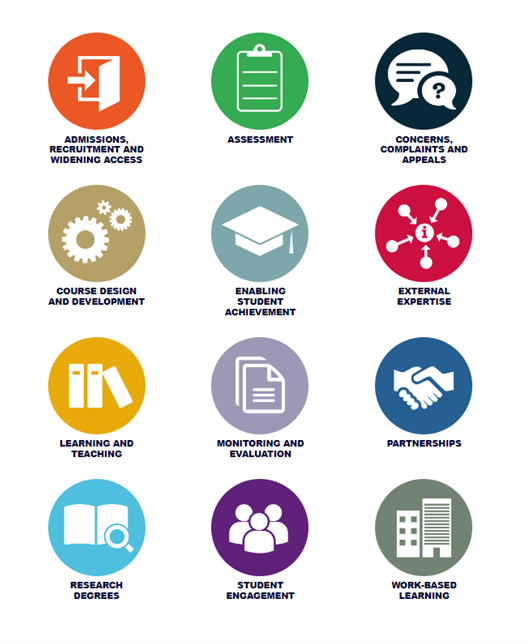
This Cardiff University toolkit is a collection of resources aimed at supporting you in Programme Development. The QAA Quality Code also includes Advice and Guidance set out as 12 themes, designed to support HEIs in meeting the mandatory requirements of the Quality Code as shown below. These are useful guides for all involved in programme design to consider.
References
Arnaud, C, H. 2020. Block plan compresses one class into a few weeks for deeper learning. Chemical and Engineering News. Volume 98, Issue 26. Available at: https://cen.acs.org/education/undergraduate-education/Block-plan-compresses-one-class/98/i26
Black, P., Harrison, C. and Lee, C., 2003. Assessment for learning: Putting it into practice. London: McGraw-Hill Education.
Bowen, R. S. 2017. Understanding by Design. Vanderbilt University Center for Teaching. Available at: https://cft.vanderbilt.edu/understanding-by-design/.
McTighe, J. and Wiggins, G., 2012. Understanding by design framework. Alexandria, VA: Association for Supervision and Curriculum Development.
Lindblome-Ylanne, S., Parpala, A. and Postareff, L. (2018). What constitutes the surface approach to learning in the light of new empirical evidence? Studies in Higher Education, Volume 12 (4).
Schellekens, L.H., Bok, H.G., de Jong, L.H., van der Schaaf, M.F., Kremer, W.D. and van der Vleuten, C.P., 2021. A scoping review on the notions of Assessment as Learning (AaL), Assessment for Learning (AfL), and Assessment of Learning (AoL). Studies in Educational Evaluation, 71, p.101094.
QAA. 2020. Professional, Statutory And Regulatory Bodies. Available at: https://www.qaa.ac.uk/about-us/who-we-work-with/professional-statutory-and-regulatory-bodies
Wiggins, G., and McTighe, J., 2005. Understanding by design.
Yan, Z. and Boud, D., 2021. Conceptualising assessment-as-learning. In Assessment as Learning (pp. 11-24). Routledge.
Share your feedback
Next steps
You are on page 2 of 4 of the education development process pages.
The next pages are:
- Learning Design and Preparing to Teach (see warning below before moving onto this page)
- Learning Enhancement
(The previous page was Programme Scoping)
❗ It is strongly recommended if you are designing a new programme or undergoing revalidation that you explore the following pages as you build up your Quality documentation. They are in a fixed order: