Programme Scoping
Getting started with Programme Scoping
Who is this page for?
This page is for anyone leading or supporting the development of a new programme or redesigning an existing one. It may also be of interest more generally, for instance, if you are trying to better understand how new programmes are developed and what areas are considered during the process.
Welcome to Programme Scoping
Programme scoping is a critical process in the strategic development of higher education curricula. At Cardiff University, where academic excellence, research leadership, and global engagement are of paramount importance, the task of scoping degree programmes for development or redesign involves a multifaceted approach. It requires aligning academic vision with market demands, enhancing the student experience, meeting employability targets, and ensuring that programmes are sustainable and competitive. To ensure you recruit, support and empower all of the diverse students on your programme to meet their potential and be future-facing, your scoping should be guided by the principles of inclusive education and sustainability.
This section outlines the key considerations involved in Stage 1 of the process, scoping degree programmes, focusing on the rationale for development and initial scoping, market analysis, student feedback, graduate outcomes and attributes, resourcing, unique selling points (USP), and overall programme vision. This leads to In Principle Approval by the Programme Approval and Revalidation Sub-Committee (PARSC) and the Academic Standards and Quality Committee (ASQC), which ensures that the programme represents a viable investment of time and resources before detailed design work begins. You can find out more detail of the process on the ‘Approving a Programme’ intranet page.
This section will mainly be posing questions for you to consider, particularly ‘what’ ‘how’ and ‘why’. It is intended to be a series of prompts and areas to consider. There are not necessarily any right answers. The answers will be different for each programme being developed. The aim of this section is to guide you with prompts and ‘have you thought about?…’
Rationale for Developing or Redesigning Degree Programmes
The first step in programme scoping is establishing a clear rationale for why a new degree programme should be introduced or an existing one redesigned. The rationale may stem from multiple sources:
a) Responding to Societal and Industry Demands
One of the primary reasons for developing or redesigning a programme is to meet the evolving needs of society and industry. As the job market shifts due to technological advancements, globalisation, and changing economic conditions, universities must ensure their graduates are equipped with relevant knowledge and skills. For instance, the increasing importance of data science, artificial intelligence (AI), sustainability, and digital transformation has led to the creation of programmes in these areas. Cardiff University, which is known for its research-intensive focus, has a responsibility to offer cutting-edge programmes that anticipate future trends in both academia and the workplace.
b) Addressing Gaps in the Current Curriculum
The development of a new programme may also arise from a gap in the current academic offerings. For example, if there is no existing programme that addresses emerging interdisciplinary fields such as bioinformatics or environmental law, creating such a programme can attract students who are interested in these hybrid areas. Conversely, redesigning existing programmes may involve integrating new knowledge or pedagogical methods, such as incorporating digital learning platforms or experiential learning components, to enhance the educational experience.
c) Enhancing Institutional Prestige and Research Capacity
Cardiff University is not only focused on providing high quality education but also on advancing research that has global impact. Launching a new programme can help build the institution’s reputation in a particular discipline, attract leading academics, and contribute to the university’s overall research profile. For example, the introduction of a degree in quantum computing or renewable energy engineering can position the university as a leader in a high-growth research area, drawing both talented students and research funding.
d) Meeting Student Demand
Another critical driver for new or redesigned programmes is student demand. Universities are increasingly aware that students have expectations about their educational experience driven by the financial cost of a qualification, trends in society, and their own characteristics and requirements. Student interest in specific subjects, delivery modes (e.g., online, blended, or flexible learning), and employability-focused curricula can motivate universities to introduce or update programmes to stay competitive in attracting top talent.
Initial Scoping
Start by thinking about why you are planning on developing a programme. What are your key drivers? If the programme already exists and you are looking to redesign it, why? What elements of the current programme are not achieving what you would like? What is the current programme delivering that we do like? What do students say about our programmes?
The questions you can ask in this phase are almost endless. Try not to tie yourself in knots. It is important to engage with your students at this early stage to gather their insight (see student feedback below). Students often view and experience programmes very differently from staff. What is intended as an innovative approach designed to help students may be having the opposite effect in reality. It is important to gather this feedback from your students and work with them to identify what they need from your programme.
Inclusive Programme Scoping
We have a responsibility under the Equality Act 2010 to anticipate the needs of prospective, future students. In addition, one of the goals of the university’s Widening Participation strategy is: To attract and recruit students with academic potential, regardless of background or personal experience. When scoping a new programme, it is important to pay attention to diversity dimensions and the potential barriers to enrolment for those from under-represented groups, which may be created by the processes, procedures and practices of recruitment and selection. You can read more about these concepts on the Introduction to Inclusive Education page, and in this document from the EHRC which outlines your legal responsibilities). Advance HE also have produced this comprehensive guidance on equitable student recruitment and admissions and your legal responsibilities .
Being aware of the diversity dimensions of current students in your School can help to identify areas of disparity; this can inform programme design and planning, and to act as a baseline for measurement for future improvements. This is a snapshot of diversity characteristics of all students in Cardiff University from April 2024, and may give you unexpected insights into the diversity characteristics of our students. You can obtain programme-level data on diversity characteristics through Business Objects. See our page ‘Who are our students?’ for details of how to access your data.
It might also be useful to complete a personas activity, using our generic set of personas, developed for Cardiff University based on current characteristics, or by developing your own specific personas for your programme. Using personas as a team can help you to identify the issues, barriers to learning for groups of students, and the potential solutions: you can find more about the use of personas in programme design in this Personas resource, or on the Introduction to Inclusive Education page.
Market Analysis
Once a rationale has been established, a thorough market analysis is essential. This step involves understanding the external environment, including competitor offerings, employment trends, and prospective student preferences.
a) Competitor Analysis
Cardiff University operates in a highly competitive environment, both nationally and internationally. When scoping a new degree programme, it is important to analyse what competitor institutions, both within and outside the Russell Group, are offering. For example, a competitor analysis might reveal that other universities are offering cutting-edge programmes in cybersecurity or space technology, prompting the university to either differentiate its offering or introduce a new, complementary programme.
In addition to content, it is important to consider how competitor institutions structure their programmes. Are they offering more flexible study options, such as part-time, online, or modular courses? Are they partnering with industry to offer work placements or apprenticeships? Understanding these factors can help shape the structure of a new programme to ensure it remains attractive in the market.
b) Labour Market and Employer Needs
A key part of market analysis involves examining labour market trends and employer requirements. The employability of graduates is a major concern for students, and universities must ensure their programmes equip students with skills that are in demand. For instance, if market analysis indicates a growing demand for professionals with expertise in green technologies or healthcare management, it would make sense for a university to develop programmes in these areas. Collaborating with industry stakeholders can provide valuable insights into what employers are looking for and help shape the curriculum accordingly.
c) Global Market Considerations
Cardiff University attracts a significant proportion of international students. Therefore, any new programme should also consider global market trends and the international appeal of the programme. For example, a programme in international business or public health might have strong appeal to students from diverse countries, particularly if it addresses global challenges like sustainability, health crises, or digital governance.
Further considerations of market analysis
Is there a viable and sustainable market for your proposed programme? What evidence do you have to support your case? You will be asking the university to approve a programme of study and to commit a large amount of central resources to support it. You must be able to demonstrate that there is a sustainable market and pool of applicants.
- Have your application numbers been going up over the past few years?
- Are you getting inquiries about a certain type of programme?
- Are industry partners asking for a new type of programme?
- What programmes are other institutions promoting?
- How popular are these programmes?
- Are there new or updated Professional, Statutory and Regulatory Body (PSRB) requirements? (if applicable)
- Is there a new area of your discipline that is or will become prominent?
- Can this be addressed by redesigning an existing programme or would a separate new programme be more appropriate?
It is important that you work with your College Education Manager and College Data Analyst early in the development process. They can support you with some of the sector data and market analysis that you will need in order to demonstrate a market base for your programme. They are there to help you: reach out to them. The Quality and Standards Team can also provide you with key advice and information as you undertake your scoping . Of course, you can also reach out to Cardiff Learning and Teaching Academy.
Student Feedback
A student-centric approach is essential in the scoping process. We need to engage with our current and prospective students to understand their needs, preferences, and expectations.
a) Focus Groups and Surveys
Conducting focus groups and surveys with current students is a valuable method for gathering qualitative and quantitative data. Student feedback can provide insights into which aspects of the current curriculum are working well and which areas need improvement. This is especially important when redesigning existing programmes. If students consistently report that certain modules are outdated or that there are gaps in the skillsets they are acquiring, this feedback can inform curriculum changes.
b) Alumni Input
Engaging with alumni can also offer useful insights, particularly regarding how well their education prepared them for the workforce. Alumni can highlight the relevance of the skills and knowledge they gained and offer suggestions for what could have better prepared them for their careers. Their feedback is valuable not only for curricular changes but also for building stronger alumni networks that can support current students through mentoring and networking opportunities.
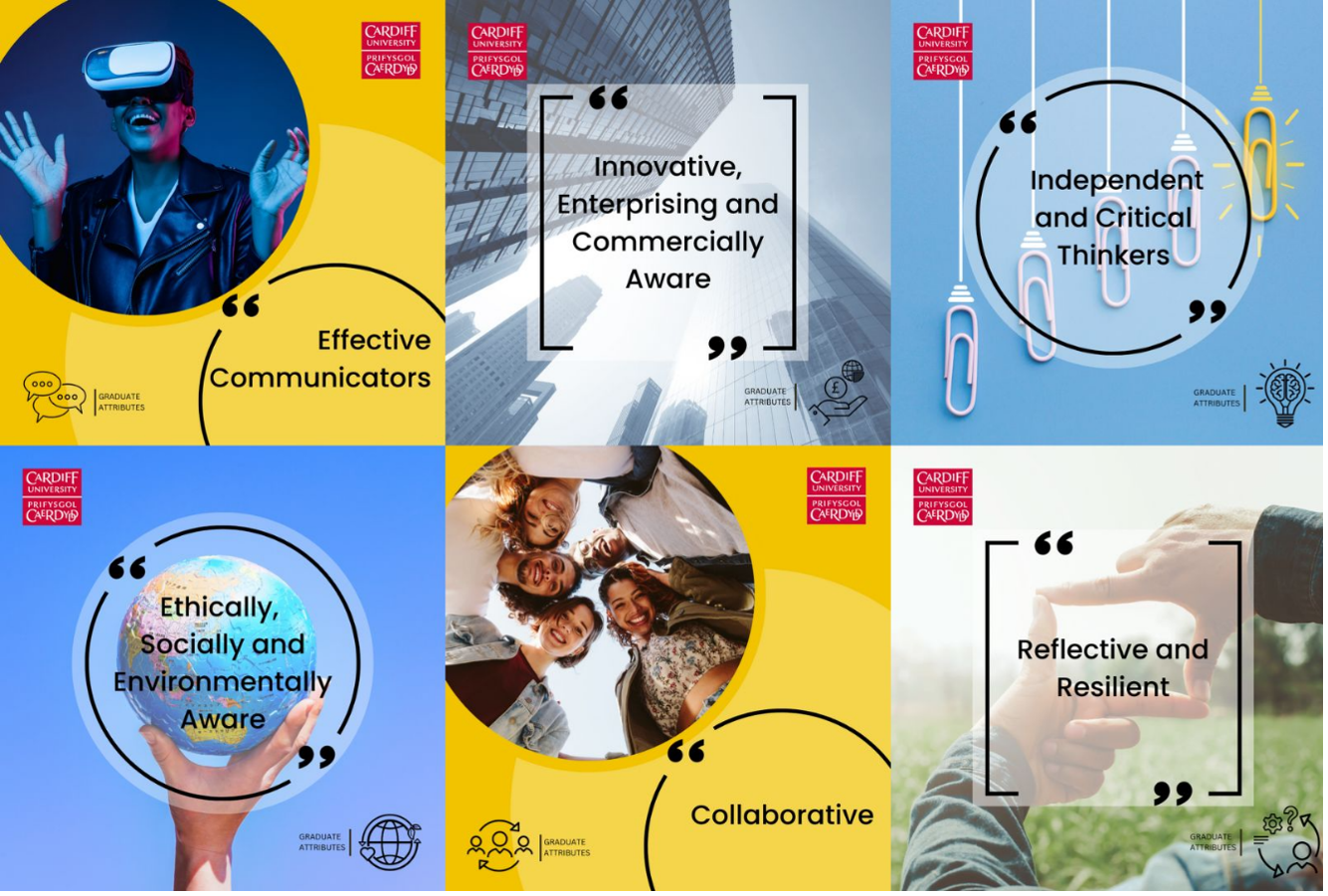
Graduate Attributes and Outcomes
An important consideration in programme scoping is how the proposed or redesigned programme will contribute to the graduate attributes and outcomes the university aims to foster. This involves a close examination of both academic and non-academic outcomes.
a) Employability
Graduate employability is a key factor for both students and universities. Cardiff University typically has strong records of graduate employability but maintaining or improving this track record requires continuously updating curricula to reflect the skills that employers value. This includes not only technical and subject-specific skills but also soft skills such as communication, teamwork and critical thinking. Embedding employability skills into the programme through work placements, internships, or projects with industry can enhance students’ readiness for the job market.
b) Global Citizenship and Lifelong Learning
Graduate attributes at Cardiff University often extend beyond employability to include fostering global citizenship, ethical awareness, and lifelong learning. Programmes should aim to cultivate these broader attributes, ensuring that graduates are not only equipped for the workforce but also prepared to contribute to society in meaningful ways. This might involve integrating sustainability, inclusivity, ethics, and social responsibility into the curriculum, or offering opportunities for students to engage in international study or community projects.
Start to think about what you will want your students to graduate with. This will be focussed on further at the start of the programme development phase but it is worth giving it some thought at this stage. What skills and attributes do you want your students to be able to develop on your programme. Is your current provision providing this?
To help with this, look at your student destination data.
- What type of employment or further study are your graduates moving into upon completion of their programme?
- Does your programme prepare them adequately for these roles? If not, why?
- What are your graduate outcomes (classifications of award)?
- Analyse student survey data and evaluations (if available).
What is missing? Talk to your connections in industry and the wider sector. What are they looking for from your graduates? Are there new skills or attributes they need from their employees and by extension, our graduates?
By planning ahead at this early stage you can start to consider:
- how your new programme might be structured in terms of delivery and assessment
- how graduate attributesand employability will be addressed
- how you will embed inclusivity and sustainability into your programme and curricula
- how you will consider the diversity of your potential students and their learning needs, and begin to plan how you will meet these needs.
You don’t need to have a fully worked up programme at this stage, but you should start to consider these issues now in order to demonstrate how your programme will meet the University’s requirements and to allow for more accurate resource predictions.
The Programme Development section of this toolkit, looks at this Stage 2 process in more detail. Some of the resources there will be helpful in planning your high level, strategic approach for programme scoping too, so feel free to look ahead at these pages to get a sense of where you might be going on your programme development journey!
Resourcing Considerations
Developing or redesigning a degree programme requires careful consideration of the resources needed to ensure its success.
a) Staffing
One of the most significant resource considerations is staffing. A new programme may require the hiring of additional academic staff with specific expertise. In a Cardiff University context, where academic staff are also expected to contribute to research, this means recruiting academics who are both leading researchers in their field and effective teachers. Moreover, the development of interdisciplinary programmes may necessitate collaboration between departments and/or schools, which requires coordination of staffing resources across the university.
b) Infrastructure and Facilities
The delivery of certain programmes may require significant investments in infrastructure. For example, a programme in biomedical sciences may require state-of-the-art laboratory facilities, while a programme in music production might need specialised equipment and studios. Schools and Colleges must assess whether their current facilities can support the proposed programme or if additional investments are needed or feasible. Infrastructure, whether physical or digital, must be accessible to all students.
c) Financial Sustainability
In addition to staffing and infrastructure, financial sustainability must be considered. This includes projecting student enrolments and determining whether the programme is likely to generate sufficient revenue to cover its costs. A financial analysis will typically include estimates of both direct costs (e.g., salaries, equipment) and indirect costs (e.g., administrative support, marketing).
Further resourcing areas to consider:
- How will your programme be structured and delivered?
- Do you have the staff and infrastructure (estates space or technology etc) to deliver a new or redesigned programme?
- Are you proposing a joint honours programme with another school? How will you split the delivery? Who will be the ‘home’ school? How will this be managed?
Having innovative ideas and plans is great, but if you can’t deliver them due to resourcing constraints, then it is all in vain. Talk to your Head of School and DLT about what resources are available for your ambitions in the first instance.
Unique Selling Points (USP) and Programme Vision
The success of a new or redesigned programme depends in part on its ability to differentiate itself in a crowded marketplace. Developing a clear USP is essential.
a) Differentiation from Competitors
The programme should offer something distinctive that sets it apart from similar offerings at other institutions. This could be a unique focus on a niche area, partnerships with leading industry partners, or the integration of cutting-edge research into the curriculum. For example, a programme that offers dual accreditation, or that combines a traditional subject like engineering with an emerging field like AI, could provide a compelling USP.
b) Articulating the Programme Vision
Finally, a clear programme vision must be articulated. This involves defining the programme’s long-term goals, its role within the broader institutional strategy, and how it aligns with the university’s mission. A well-defined vision can inspire both prospective students and faculty, and serve as a guide for the programme’s ongoing development.
Working through the below considerations with a small focus group of past and current students could provide some really useful insight at this stage. Students have the lived experience of the current programme and their views will be invaluable in helping to shape new developments
If you would like to run such a focus group, here is a comprehensive template to help you organise and run it.
Points of reflection
The following questions may help you to develop your thinking:
- What kind of difference do you want to make with this programme, both to learners and to the wider subject-discipline?
- Where will the programme sit within the external market?
- What kind of practitioner/student/graduate are you trying to build through your programme?
- What are the external drivers which inform your programme? E.g. PSRB requirements
- What will make your programme unique?
Key questions for Programme Scoping
- What makes this programme distinctive within the sector?
- What elements of the programme will you co-create with students and how might you do this?
- How are the Quality Assurance Agency’s qualification descriptors reflected within your course? (QAA Quality Code Chapter A1)
- What are the intended characteristics of graduates of this programme?
- What are the important principles and values that inform this programme?
- What pedagogical approaches will be employed to ensure active student belonging, engagement and participation?
- How does the programme take account of relevant QAA subject benchmark statements?
- How does the programme reflect professional body and registration requirements (if applicable)?
- How does the programme equip students to meet the potential future demands of employers or further study?
All programmes should embed the principles of inclusivity and sustainability to ensure equitable access, continuation, attainment and destinations for all learners.
Conclusion
Scoping degree programmes for development or redesign is a complex process that involves balancing academic vision with financial and practical considerations. It requires a clear rationale based on societal needs, market analysis, student and alumni feedback and an understanding of graduate outcomes. Additionally, careful attention must be paid to resourcing and the development of a compelling USP. Ultimately, the goal is to create programmes that not only reflect the university’s commitment to academic excellence but also equip students to thrive in a rapidly changing world.
Deeper dive
Share your feedback
Next steps
You are on page 1 of 4 of the education development process pages.
The next pages are: