Wild Pedagogies
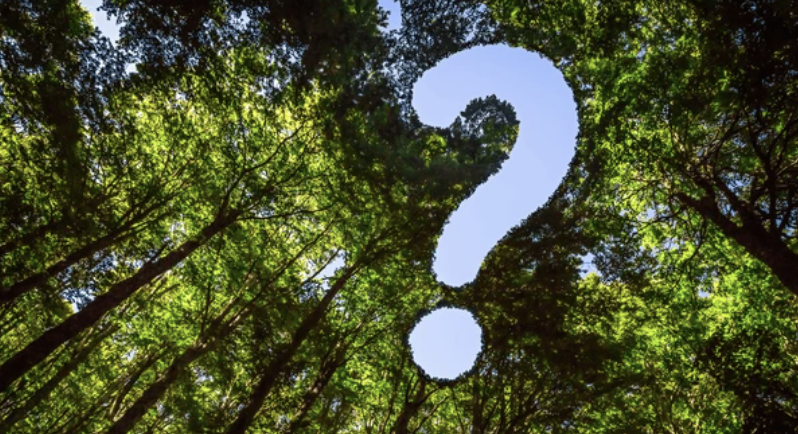
Wild pedagogies are a way of rethinking our relationships in learning experiences. They aim to support learners to critically rethink what learning means in different contexts and how learning emerges through relationships between the human and the more-than-human world. Wild pedagogies draw on experiential learning building from the work of John Dewey but focus on using nature and nature experiences as co-teacher in the learning process, looking at what it means for learning in our disciplines and how that relates to us and the wider environment. Building from its etymological roots, the term ‘wild pedagogies’ suggest pedagogies that embrace self-will of some form, as self-willed-pedagogies, understanding that in a pedagogical situation, there are always already multiple wills vying to express their agency: including the self-will of the teacher, the self-will of the students and the self-will of the land, or wider nature (Quay and Jensen 2018). In this sense wild pedagogies purposefully engages with those wills beyond student and teacher in a pedagogical situation, acknowledging that a broader understanding of wild pedagogies must include other-than-human centredness. This can be very beneficial for supporting relational understanding, deep reflection, systems-thinking and wellbeing.
In linking theory and practice, wild pedagogies created six key touchstones (described below) to provide reminders, challenges, and a place to return to for educators interested in experimenting with wild pedagogies. They offer questions that educators can ask every day to remind themselves of what they are trying to do in their daily activities. For some, wild pedagogies will provide recognition of what they already do. For others it might inspire a wilding of their practice—providing opportunities to attend to the wildness of places, themselves, and their students in a deeper way (Blenkinsop, Morse, and Jickling 2022) .
The six main touchstones of Wild pedagogies are:
- Agency and the role of nature as co-teacher
- Wildness and challenging ideas of control
- Complexity, the unknown, and spontaneity
- Locating the wild
- Time and practice
- Cultural change
Why are Wild pedagogies beneficial to learning experiences?
The desire for control often plays out in our educational institutions in ways that make things measurable, routine, universal, and ultimately work to delineate ways of being. It is made manifest in many ways throughout education—often working to push educational practices into particular rationalistic ways of seeing the world (Morse, Blenkinsop, & Jickling, 2021). Wild pedagogies allow for a way of questioning this and support routes for learners to develop different skills, knowledges and experiences that allow them to develop a multi-faceted way of seeing, acting and being with the world.
How can this support ESD in my learning and teaching practice?
Wild pedagogies support, enhance and develop reflection in learning experiences, particularly in relation to understanding and developing our relationship with the more-than-human world. They support an understanding that helps learners to comprehend and enact the 8 UNESCO sustainability competencies required for learning and living during a polycrisis. They support the development of a more relational epistemology, ontology, ethics, metaphysics, and practical engagement with society, economy and environment that enable a pathway to more sustainable futures for living and learning. This way of engaging supports learners to purposefully and critically tackle wicked problems and complex challenges that the 17 United Nations Sustainable Development Goals and Well-Being Goals recognise.
Case study: SOCSI Dr Kevin Smith, Reader in Education and Education Team Lead
A little bit about yourself and how you came across wild pedagogies
I’m Dr Kevin Smith, Reader in Education and Education Team Lead in the School of Social Sciences. My work focuses on curriculum theory, reconceptualist approaches to curriculum, and close-to-practice research involving the analysis of educational experience and its impact on our lives and society. In my Radical Education module, I invite students to step beyond the classroom to explore how learning unfolds through our relations with place, each other, and the more-than-human world. My interest in Wild Pedagogies grew from John Dewey’s experiential philosophy and my ongoing research into embodied, place-based curriculum theory.
How have wild pedagogies supported your students in their learning? Evidence of impact here – exam results/ engagement/ comments from learners
Student comments in module enhancement reports show that wild pedagogies have had a transformative impact on engagement, learning, and wellbeing. They consistently praised the opportunity to “get outside and experience learning differently,” describing our sessions in Bute Park as “amazing” and that these are experiences are “unlike any other module” they’ve had. Many commented on how their experiences on the module led to a “positive and encouraging learning environment,” where “real relationships formed,” and how wild pedagogy “put the fun back into education.” All of our learning sessions are aligned to the module’s ‘authentic assessments,’ and both students and external examiners have commented on the innovative nature of these assignments.
How challenging were wild pedagogies to implement? How did you start and where are you now with this in your practice?
Introducing wild pedagogies was initially challenging. I instigated a relationship with Bute Park to arrange a venue for our work and, with the support of the School, became a qualified Forest School leader. The practical arrangements involved rethinking timetables, managing health and safety, responding to students’ needs and, of course, navigating the Autumn weather. Early sessions in Bute Park invited students to engage in ‘wild pedagogy’ activities as social scientists. Through first-hand experiences, they were to evaluate their experience and determine if they felt the claims associated with wild pedagogy were defensible or legitimate. Over time, due to the impact wild pedagogy had on students’ sense of wellbeing and community, the sessions became central to the module. Every year since, students have described these experiences as ‘inspiring’ and ‘immersive.’ Through developing links with community partners, co-creating curricular experiences with students, and careful assessment design, wild pedagogy has evolved from occasional outdoor tasks to a core component of the Radical Education module that supports cynefin, and a community ethos that values, slowness, attentiveness, and care. What began as an experiment is now a defining element of my teaching praxis and, I hope, a module for others exploring embodied, emplaced, and relational pedagogies at Cardiff.
How have wild pedagogies changed your understanding of learning and teaching?
I’m originally from Utah in the United States, a place known for its striking geography and expansive wilderness. From a young age, I was drawn to what nature could reveal beyond cognitive understanding alone. As an educator, I’ve sought a theoretical lens that could capture this sense of learning with and from the world. Wild pedagogies, shaped by influences of Dewey, Freire, and hooks, together with my close-to-practice research on emplaced and embodied reflection, offered precisely that. This perspective deepened my understanding of how to support a shift from a curriculum dominated by epistemology (knowing) to one grounded in ontology (being and becoming). Working with students to attend to how they think, practice and become within and through their environments has cultivated a more holistic approach to education, one that engages the whole person rather than treating learning as a transfer of knowledge.
Additionally, insights from Laura’s work has enhanced my understanding of our students ‘lifeworlds.’ Her mapping/relationscapes’ practice illustrates how cognition and ontology are co-constructed across materials, bodies, time and place. Surfacing these relations with my students has helped us to realise a truly dialogic pedagogy that, we think, lead to transformative experiences in the classroom (and beyond!).
Dr Kevin Smith's Top tips for others looking to use wild pedagogies in their practice
- Start with attention, then intention.
Following Dewey’s idea of “ends-in-view,” let learning unfold from the encounter rather than prescribing its conclusion. Focus on presence, not productivity.
- The world as a pedagogical agent.
The environment is not a container in which life takes place; it is the medium through which life, and therefore, education, is made manifest. - Design for unpredictability. Build activities with enough structure to feel safe, but leave room for weather, movement, and surprise. Uncertainty can be generative.
- Combine experience and inquiry.
Pair sensory, movement, and social interaction with structured moments of reflection; writing, mapping, or quiet conversation. - Wild pedagogy is relational pedagogy:
Cultivate care, responsibility, and reciprocity among colleagues, students, and the more-than-human world. - Make the familiar wild.
“Wild” doesn’t require wilderness. A garden, a field, or a park can become a site for embodied, emplaced, and relational education. - Let theory inform action, action feed reflection, and reflection ground theory.
Frame experiences through a guiding question or idea, then engage and reflect for new insights and deeper understanding. - Acknowledge practicalities.
Plan early for weather, accessibility, inclusion, and institutional policy. - Model vulnerability and curiosity.
Learn alongside students; model the way. - Start small, build smart, and seek friends.
Pilot a single outdoor or sensory session. Align activities with module outcomes and assessments, and collaborate with colleagues for insight and support.
Links:
Quay, J., Jensen, A. (2018) Wild pedagogies and wilding pedagogies: teacher-student-nature centredness and the challenges for teaching. Journal of Outdoor and Environmental Education 21, 293–305 (2018). https://doi.org/10.1007/s42322-018-0022-9
Morse, M., Blenkinsop, S., & Jickling, B. (2021). Wilding educational policy: Hope for the future. Policy Futures in Education, 19(3), 262-268. https://doi.org/10.1177/14782103211006649 (Original work published 2021)
Pedagogy in the Anthropocene: Re-Wilding Education for a New Earth. 2022. Edited by Michael Paulsen, jan jagodzinski, and She M. Hawke. Part of the Palgrave Studies in Educational Futures Collection.
Podcast: