Teaching Approaches for Engagement and Learning
This page introduces you to the vast array of teaching approaches, strategies or techniques you might use when engaging with your students. It is designed for anyone who is teaching or supporting learning.
Aligned to PSF: V1,V2, K1, K2, A2
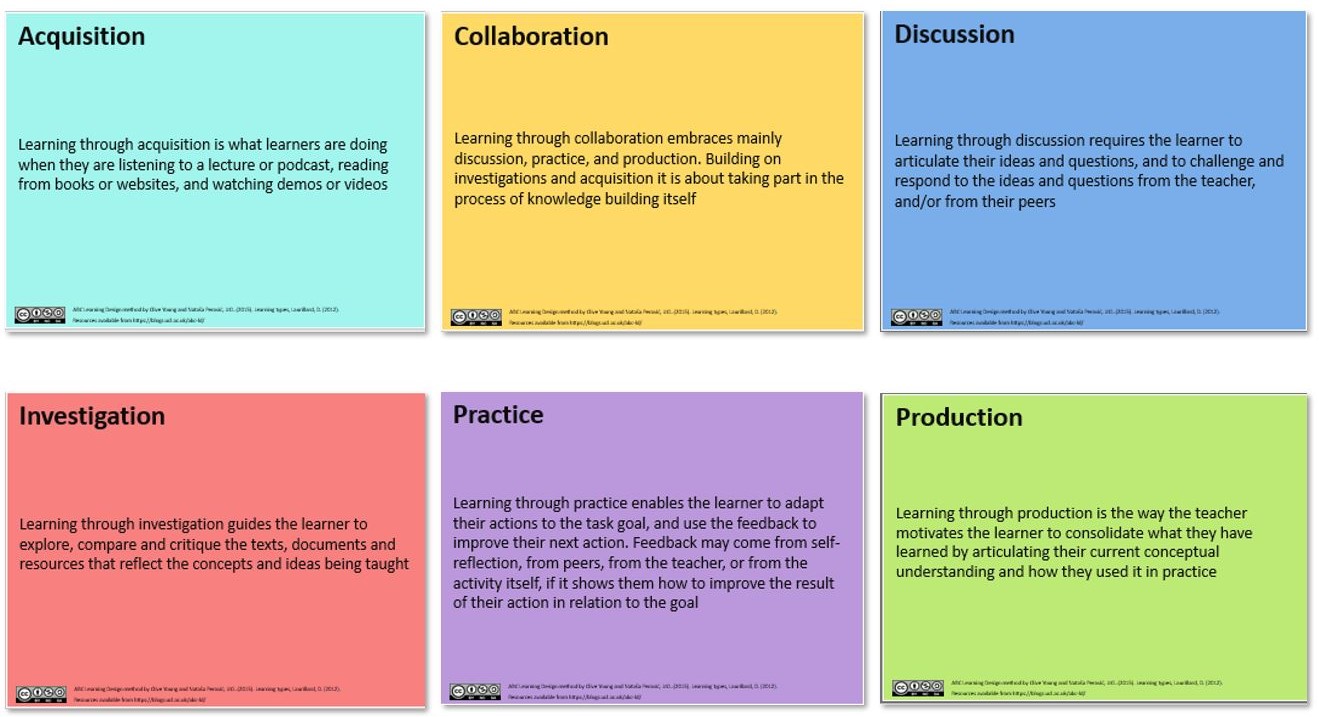
The Xerte resource ‘Teaching Approaches Toolkit’, below, contains 50 teaching approaches for you to explore, to enhance your teaching and deliver a variety of strategies to meet your diverse learners’ needs, preferences and characteristics. The six sections of the Xerte toolkit match the ‘learning types’ of ABC Learning Design .
You can develop your understanding of Teaching Approaches by engaging with Designing for Engaging and Active Learning and with our seven other related teaching approaches workshops. Find out more on the Cardiff LTA CPD page.
There is also School-based further support available: ABC workshops provide a space for module teams to set aims, make plans and evaluate how close your plans are to what you are seeking to achieve. Cardiff Learning and Teaching Academy can facilitate ABC workshops for programme teams: reach out by contacting the LTA. For more information about ABC, you can also explore the intranet page.
The Toolkit is designed to embed the following key principles:
Educational theory
These teaching approaches are underpinned by extensive research and theoretical perspectives on learning and teaching. To read a short summary of educational theory, to support your selection of teaching approaches, access Chapter 1 of Hunt and Chalmers University Teaching in Focus, or read this summary of 3 key theories and their application.
Inclusive Education
Each approach identifies the inclusivity considerations of the method. To inform your understanding of the inclusive education advice given for each approach, you may want to delve a little deeper into the principles of inclusive education. Access the Inclusivity theme page to expand your understanding. Any teaching approach will disadvantage some groups of students: consider employing Universal Design for Learning using multiple modes during a session, or across sessions, to ensure students experience some approaches which are comfortable.
The Teaching Toolkit:
(Click on the menu icon, top right on the toolkit below, to open the pages. To open on a new browser, access this Teaching Toolkit link.)
Authored by: Cardiff University Learning and Teaching Academy: Fellowships Team