Approaches to Assessment
This page provides practical tools and considerations to support any staff involved in designing, completing and marking for assessment and feedback. It is intended for all staff involved in assessment and feedback, whether academic or professional services, and whether the development under consideration is a new programme or enhancements to existing programmes or modules.
Aligned to PSF: V1 and V2, K1, K3, K5, A3
You can develop your understanding of Approaches to Assessment by engaging with our related Assessment and Feedback workshops. Find out more on the Cardiff LTA CPD page.
Together, these resources aim to support you to work together with students and staff when creating and evaluating assessment and feedback, emphasising the importance of working collaboratively with colleagues and engaging students as partners. The next section will assist you in the creation of authentic assessment, which considers students’ current and future learning needs. Section three considers teamwork, and related resources to support this form of assessment. The final section presents the large array of individual assessment methods and their different affordances for inclusivity and for effective and inclusive practice.
Co-creation in Assessment
‘Co-creation of learning and teaching occurs when staff and students work collaboratively with one another to create components of curricula and / or pedagogical approaches.’ (Bovill et al, 2016: 196)

Engaging in dialogue with students about assessment facilitates a shared understanding of assessment. It is evident that when working on co-created assessment and feedback projects with students, this creates opportunities for students to voice their understandings of assessment and share in decision making regarding assessment purpose and design, enhancing literacy via mutual discussions of standards, criteria and feedback.
Students can gain a better understanding of the assessment process – becoming assessment literate in the process and adjust their focus to be more on their learning rather than just their grades. It is also evident that it enhances the development of their skills and their assessment performance overall.

Ways to Foster Co-Creation in your Assessments
Co-creation of assessment with students may include a range of ways to work more closely with students in areas that can enhance student engagement. Some of these areas are listed here:
- Designing marking rubrics: students can take ownership of their learning by defining standards. See the Deeper Dive below for more information about staff-student co-creation of marking criteria.
- Designing MCQs (Multiple choice questions): students undertaking the Peerwise initiative in 12 schools across the University have the chance to pose example questions that their fellow students answer anonymously; questions are given marks and the students are able to see how effective and accurate their questions may be.
- Co-assessing presentations: students award themselves a grade and the tutor also awards them a grade. The tutor then meets all the students individually to agree upon a final grade. This encourages the students to negotiate and articulate a rationale for their performance. If they can’t reach agreement on the grade, the tutor retains responsibility for awarding a final grade, but is transparent and open with students about the rationale for decisions.
Useful Resources
This page, by Bournemouth University, describes the co-creation of assessment tasks applied to two of their modules, as well as the lessons learnt from this – including that there is no ‘one-size-fits-all’ approach possible!
Read here about a project at the University of Cumbria where staff and students co-created assessment criteria, concluding that the staff version was too complicated, using opaque academic discourse, and the student version was too simplistic, and that criteria need to be made accessible to students – considering the question, ‘Who are these [criteria] created for?’
A co-creation approach to strategic enhancement of assessment and feedback in Nursing and Midwifery from the AdvanceHE Teaching and Learning Conference 2019 can be found here.
Case Studies in Co-creation
Case Studies in Co-Creation
Architecture
Co‑creating Assessment Rubrics to Enhance Assessment Literacy and Professional Agency in Architecture
Over a period of 5 years, I’ve introduced iterative cycles of assessment co-creation within my Level 6 and 7 Architectural Design modules (cohort c.100 students per year). My aim has been to enhance assessment literacy and offer students meaningful agency to address shifting professional priorities, including sustainability, safety and inclusion.
The catalyst for this work came in 2021, when a student challenged us directly: “Should unsustainable design projects be worthy of the highest marks?” This question highlighted a misalignment between students’ professional values and how achievement appeared to be rewarded within existing assessment criteria.
In response, I designed a high‑impact, low‑input asynchronous induction activity for groups of 5/6 that is now an annual feature. Students watch a topical recorded debate related to contemporary architectural practice in their own time then meet in groups to critically appraise how the module rubric captures, values or overlooks these issues. Each group is required to post a response on a Learning Central discussion board, which could include revisions to the rubric. This exercise takes place in week 1 and is not assessed, allowing students to engage freely without performance pressure.
The extent and quality of student engagement is impressive! Framing the appraisal through shared professional concerns gives the task authenticity and relevance beyond an exercise in assessment literacy. Comments demonstrate deep, critical engagement with the rubric and each other, often going well beyond the task brief, evidencing teamworking skills and recognising different points of view. Diversity of opinion can be challenging when seeking student consensus, an important point I highlight when feeding back to the class.
This process has had a clear impact on assessment literacy. Students demonstrate a sophisticated understanding of how criteria can be applied, including how professional competencies can be articulated and assessed. Since introducing this activity, there have been no claims that students were unaware of the rubric prior to submission! Student feedback has led to changes to criteria language, how specific competencies are assessed and introducing weightings across criteria.
Importantly, co‑creation has surfaced problematic or ambiguous terminology. This prompted me to critically reflect on the inclusivity and appropriateness of language, and reinforced a key learning: it is not sufficient for students to practise applying assessment criteria—the assessor’s interpretation must also be made explicit. I addressed this through a follow‑up workshop unpacking disciplinary language, QAA level descriptors and the origins of key terms, supporting the development of a shared understanding.
In some cycles, gaining consensus on changes in-year has been challenging, but the students' ideas, insights and critique were still valuable to iteratively develop the rubric for the next cohort. In my current role as Assessment & Feedback Lead, I am embedding these student‑generated principles into new Generic Criteria and module rubrics and have reused this induction activity to test them. I would strongly encourage colleagues to view co‑creation of assessment not as relinquishing academic standards, but as a powerful mechanism to make valuable, targeted refinements to assessment practice and actively engage students in considering how assessment relates to their learning and their personal and professional values.
Caroline Almond ARB SFHEA. Almondc2@cardiff.ac.uk Senior Lecturer- Assessment Feedback Lead (Archi). Module Lead ART901 Design in Practice (60 credits, Level 7)
Dental
Reflective practice sits at the heart of professional knowledge and competence. Clinical teachers at all levels (both undergraduate and postgraduate) are faced with the challenge of developing and assessing this important skill. Structured, objective rubrics for assessing reflection do exist; however, no single rubric has been widely adopted, perhaps because they are complex.
What was tried?
A focused literature review facilitated the development of three important domains of reflective practice and reflective writing; these were entered into a 4-domain assessment matrix
Stage 2 dentistry, and hygiene and therapy students were asked to write a clinical reflective report. The grading matrix was published in advance and students were asked to grade their work prior to submission. The reports were team-marked by six members of staff.
The domains were:
Level of reflection: a poor report would be descriptive and make no attempt at reasoning, describing events in this manner: ‘I asked the receptionist to reschedule the patient.’ A failing report would contain only descriptive reflection, in which reasons are provided but only in a reportive way, such as: ‘I asked the receptionist to reschedule the patient because I was running late.’ A satisfactory report would also contain dialogic reflection in which the writer mulls over the reasons and explores alternatives, using expressions such as ‘perhaps…’, ‘I wonder…’ and ‘maybe…’. Finally, a meritorious report would contain mostly critical reflection that takes into account the social context in which events took place and decisions were made, and would make mention of, for example, roles, relationships, gender and ethnicity.
Level of exploration: a poor report would be purely descriptive and would make no consideration of other factors. A failing report would be overly descriptive or lengthy at the expense of influencing and alternative factors. A satisfactory report would contain a brief description and consider influencing and alternative factors. A meritorious report would do the same, but would also consider clear and explicit learning points.
Frames of reference (FoR): a poor report would take no account of other FoR and would not stand back from the situation. It would be written only from the observer's point of view. A failing report would pay only minor consideration to FoR. A satisfactory report would consider FoR for most reported events, and a meritorious report would clearly demonstrate that FoR had been considered for all events reported during the clinical encounter.
Kappa scores between staff and student grades improved each year, reaching 0.677 for the last cohort (n = 110; standard error 0.093; p < 0.000).
What lessons were learned?
Students and staff reported that the matrix helped them to understand the process of reflection. When the matrix was published in advance, failure rates dropped from circa 15% to 2%. All individuals who failed to write a satisfactory report graded themselves as satisfactory; these students must be identified for further tutoring. Clinical teachers and postgraduate clinical trainers found the matrix useful for developing reflective skills and for quickly assessing the level of reflection within a report. The grading matrix was shown to be a valid and reliable tool.
Here is the Assessment matrix
Authentic Assessment
The Principles of Authentic Assessment
In addition to providing authentic contexts that reflect the way that knowledge will be used in real life, and providing authentic tasks and activities, Harrington et al. (2014) suggest that authentic assessment will:
- Provide access to expert performances
- Provide multiple roles and perspectives
- Support collaborative construction of knowledge
- Promote reflection to enable abstractions to be formed
- Promote articulation to enable tacit knowledge to be made explicit
- Provide coaching and scaffolding
These principles prompt us to consider group work (see Teamwork), reflective tasks, and the involvement of external stakeholders.
The benefits of authentic assessment
- Making assessment more authentic encourages students to engage more with assessment and for them to develop a greater skill set than more traditional methods
- They can meet the demands of external stakeholders such as industry and the professional bodies for higher education to offer more relevant courses and enhance graduate employability including the development of transferable skills
- Overall, they show clear alignment between the desired learning outcomes, content of the curriculum and future career-based knowledge and awareness e.g. an authentic assessment for an engineering course would demonstrate a student’s ability to think and problem solve in ways that resemble how experts in the engineering field would think and act
- Assessment that reflects how students can or will use disciplinary knowledge, or ‘authentic assessment’ can help in ‘designing out’ plagiarism.
Even if your assessments are already pre-determined, you can still nudge them towards being more authentic during the Learning Design stage. Even if you have already considered in your Programme Development how your assessment choice will allow for authenticity, there is still work to do at this stage to ensure you bring it to life in a meaningful way. Click on the below choices to explore how you might nudge existing assessments towards being more authentic, and for some practical tips for bringing that authenticity to life in your teaching.
I want my assessment to have real-world elements within it
Traditional content-based essays can be easy targets for essay mills, AI text generators, plagiarism, and collusion. It is also important to remember that they provide students with few transferrable skills outside of academia. Changing the focus of an assessment, therefore, to something applied, local and reflective can ensure students and staff get the most from the piece.
Below is an example of how written assessments can be transformed, from Sally Brown and Kay Sambell’s work:
Typical traditional Exam / Essay question
What are the main practical aspects that need to be considered at the planning stage of a geophysical offshore survey for a prospective offshore engineering development?
Authentic assessment alternative – Technical Tender Document Exercise
The objective of this exercise is to draw-up the technical document that an offshore survey company might submit to a client (an energy company), in an attempt to be awarded a contract. You take on the role of the survey company. The technical document would normally comprise part of a wider “tender document” that would also typically include financial and contractual parts. These latter parts do not form part of the assessment exercise.
Much of the work done in class will be around helping students to develop the real-world skills to begin to work towards their assessment: with scaffolding, discussion around what good looks like based on real-world examples and feedback.
I want to involve employers / stakeholders in my learning design
Employers/ Stakeholders could be involved in a number of ways during the learning design period, including:
- Helping to design the assessment (including giving a local context or providing a real brief for something that their company needs)
- Helping to design the assessment criteria
- Providing real exemplars
- Providing learning materials, such as case studies or video reflections on a topic
- Providing lectures or taking part in question-and-answer sessions
- Giving formative feedback
- Being present during summative assessments, for instance, asking questions during a pitch or presentation
Exactly which, if any, of these you choose will depend on the nature of the discipline and whether you have to forge new relationships with stakeholders. For disciplines less tied to a set employment route, it will be worth exploring how the skills developed could be applied to other pathways: providing feedback and opportunities for students to reflect on the on-going development of their graduate attributes provides a meaningful way to do this.
I want to redesign existing assessments towards being more authentic
Lydia Arnold has developed a highly engaging, evaluative and fun ‘top trumps’ style game based on the work of Ashford-Rowe, Herrington and Brown (2014) as the criteria for ‘trumping’ the other authentic assessment types. Not only are these fun, there are tangible examples of authentic assessments within there. There are blank cards, too, so you can put your own assessments to the test against the exemplars.
I want to nudge towards more active, authentic approaches
- If you are not in a position to redesign whole assessment approach, then move towards authentic assessment by changing one task at a time or an aspect of a task
- Devise a task that will give your students a realistic ‘project’ and make sure that they have time to plan, gather the necessary information, revise and self-assess
- Always make sure that students are clear about what is expected of them regarding the processes and outcomes
- You might also involve students in the development of the assessment criteria
Case Studies in Authentic Assessment
Cardiff University Case Studies

Assessment comprises a Game Criticism Article and a Game Concept Group Portfolio, enabling students to engage with games critically and develop digital game concepts based on historical research. The module integrates theory and practical workshops, encouraging students to apply theoretical frameworks to their creative endeavours.
Future plans include incorporating basic game design software to allow students to prototype their concepts while maintaining a focus on research. Additionally, efforts are underway to integrate history and heritage-based approaches with game design at both curricular and extracurricular levels, building on collaborative initiatives like the Cardiff Heritage Jam.
Esther says, ‘consider if there are ways of designing modules like this that allow students to apply their more traditional research and analysis skills in creative ways’.
Read more about 'Digital Games and the Practice of History'.
Cardiff University Case Study 4
Teamwork as an Assessment Tool
Teamwork can provide powerful opportunities for students to learn with and from one another while developing skills that are highly valued both within higher education and beyond. When designed effectively, teamwork can support deeper engagement, enhance students’ sense of belonging, and create authentic learning experiences that mirror the collaborative nature of professional practice.
However, successful teamwork rarely happens by accident. Students often need guidance in how to work effectively with others, while staff need to consider how teamwork aligns with learning outcomes, assessment design, and the overall student experience. This section provides practical guidance to support the design, facilitation, assessment, and evaluation of teamwork activities. It also encourages an inclusive approach that anticipates potential barriers to participation and gives students appropriate flexibility in how they access information, contribute to the team, and demonstrate their learning.
Why Use Teamwork?
Teamwork can create opportunities for students to engage with different perspectives, negotiate ideas, and develop collaborative approaches to solving complex problems. These experiences can enhance learning while helping students develop transferable skills such as communication, critical thinking, planning, negotiation, and reflective practice. Many programmes also use teamwork to provide authentic experiences that mirror professional environments where collaboration is an essential aspect of practice.
While teamwork can offer significant benefits, it should not be viewed as a default approach. Rather, it should be used where collaboration adds clear value to the learning experience and supports the achievement of intended learning outcomes.
Key Considerations
- How will teamwork enhance student learning?
- What skills or experiences will students gain through collaboration?
- Is teamwork necessary to achieve the intended learning outcomes?
Teamwork and Student Learning
Teamwork differs from simply placing students into groups. Effective teamwork involves shared goals, interdependence, collective responsibility, and active contribution from all team members. Students are not only working alongside one another but learning how to collaborate in meaningful ways.
When successful, teamwork can:
- Encourage peer learning and knowledge sharing;
- Develop communication and interpersonal skills;
- Improve confidence in working with others;
- Support critical thinking and problem solving;
- Provide opportunities for reflection and self-awareness;
- Prepare students for collaborative professional environments.
Is Teamwork the Right Choice?
Before introducing teamwork, it is important to consider the purpose of the activity and whether collaboration genuinely enhances learning. Questions to consider include:
- What is the pedagogical rationale for teamwork?
- Does the task require students to work collaboratively?
- What level of experience does the cohort have with teamwork?
- What support will students need to succeed?
- Would an individual activity achieve the same outcomes equally effectively?
- Can all students participate meaningfully, including those who may face barriers relating to communication, scheduling, location, technology or the format of the activity?
Considering these questions at an early stage can help ensure that teamwork is used purposefully and that appropriate support mechanisms are established from the outset.
Designing Teamwork Activities
The success of teamwork is often determined during the design stage. Students should have a clear understanding of why they are working together, what they are expected to achieve, and how their work will be evaluated. The design of the task, formation of teams, and assessment approach should all align with the intended learning outcomes and broader aims of the module.
Key Considerations
- What are students expected to learn?
- What collaborative activity will enable this learning?
- How will achievement be demonstrated?
- How will students be supported throughout the process?
Suggested Design Framework
Learning Outcomes
What should students learn?
Team Activity
What collaborative task will support this learning?
Evidence of Learning
How will achievement be demonstrated and assessed?
Designing the Activity (expand to read more)
When designing a teamwork activity, consider the scope and complexity of the task, the expected outputs, and the resources students will require. Effective tasks typically require genuine collaboration rather than simply dividing work between team members.
Consider inclusion at the design stage rather than responding only when difficulties arise. Where the learning outcomes allow, provide appropriate flexibility in how students access instructions and resources, communicate with their team, contribute to the activity, and demonstrate their learning. Any flexibility should preserve the intended learning outcomes and relevant competence standards.
It may be helpful to consider:
- The purpose and duration of the activity;
- Whether the activity is formative or summative;
- The expected outputs or deliverables;
- Opportunities for reflection or peer feedback;
- How the task aligns with module learning outcomes and graduate attributes.
- Potential barriers to participation, access or communication.
Tasks should be sufficiently challenging to require collaboration while remaining realistic and achievable within the available timeframe.
Forming Teams
The way teams are formed can significantly influence the student experience. Some activities may benefit from students selecting their own groups, while others may require staff allocation to ensure diversity, balance, or inclusion.
There is no single approach that is appropriate in every context. Decisions should be informed by factors such as:
- Cohort size;
- Nature of the task;
- Desired team composition;
- Student experience and confidence;
- Practical considerations relating to management and support.
Team size should also be carefully considered. Larger teams may offer a broader range of perspectives, while smaller teams can be easier to coordinate and monitor.
Assessing Teamwork
Assessment design plays a critical role in shaping student engagement with teamwork activities. Assessment may focus on the final product, the teamwork process, or a combination of both.
Students should have accessible assessment information, clear criteria and suitable opportunities to practise the teamwork and peer-evaluation processes before these contribute to a summative mark.
When designing assessment, consider:
- Whether marks are shared or individual;
- How contributions will be recognised;
- The role of peer assessment;
- Opportunities for self-reflection;
- How fairness and transparency will be ensured.
Peer assessment tools, such as BuddyCheck (More information below), may provide additional opportunities to recognise individual contributions and promote accountability within team-based activities.
Using BuddyCheck for Peer Assessment
Recognising individual contributions is often one of the most challenging aspects of assessing teamwork. Peer evaluation can provide valuable insight into how teams function, encourage accountability, and create opportunities for constructive reflection on collaborative working practices.
BuddyCheck enables students to provide structured feedback on their own and their peers' contributions throughout a team project. Peer evaluation data can be used formatively to support development and identify issues early, or summatively where this aligns with programme and assessment requirements. When used summatively, BuddyCheck can generate an adjustment factor based on peer evaluations, allowing a shared team mark to be adjusted to reflect individual contribution. This means that students who make an exceptional contribution can be recognised through a higher individual mark, while students whose contribution falls significantly below expectations receive a mark that more accurately reflects their level of engagement and participation.
Peer evaluation is most effective when embedded throughout the teamwork process rather than being used only at the end of a project. Regular opportunities for reflection and feedback can help identify challenges early, support productive team dynamics, and encourage greater accountability within teams.
BuddyCheck Staff Guide
Supporting Successful Teamwork
Effective teamwork relies on more than task design alone. Students often benefit from guidance on communication, collaboration, decision-making, and managing differences of opinion. Providing structured support throughout the activity can help teams work more effectively and reduce common challenges before they arise.
Key Considerations
- How will students develop teamwork skills?
- How will progress be monitored?
- How will challenges be identified and addressed?
- How will you plan for and address extenuating circumstances?
Preparing Students for Teamwork (Expand to read more)
Students may arrive with very different levels of experience of collaborative learning. Some may have extensive experience working within teams, while others may feel uncertain about expectations or lack confidence in collaborative settings.
Consider supporting students to develop:
- Communication and negotiation skills;
- Collaborative decision-making;
- Effective meeting practices;
- Conflict resolution strategies;
- Reflective approaches to teamwork.
Providing guidance and formative experiences early can help establish shared expectations and create a stronger foundation for successful collaboration. Make expectations explicit rather than assuming that all students share the same understanding of effective teamwork. Provide instructions in clear language and, where useful, through more than one format. Explain unfamiliar terminology, model effective team behaviours, and give students low-stakes opportunities to practise before undertaking assessed teamwork.
Team Preparation Checklist
-
-
- ✔Establish shared goals and expectations
- ✔Agree accessible communication methods, within the team and insturctor
- ✔Clarify responsibilities and roles
- ✔Discuss individual availability and anticipated barriers
- ✔Agree how team members can contribute in different ways
- ✔Schedule regular meetings
- ✔Review progress regularly
- ✔Establish how concerns will be raised
-
Monitoring Progress
Regular monitoring provides opportunities to identify challenges before they become significant barriers to success. Monitoring approaches might include team logs, progress reviews, meeting records, formative checkpoints, peer feedback activities (BuddyCheck), or reflective exercises.
Monitoring should recognise that meaningful contribution may take different forms and should not rely solely on attendance at meetings, confidence in speaking, or visibility within a particular communication channel.
These activities can provide valuable opportunities for both staff and students to review progress and make adjustments where required.
Supporting Team Dynamics
Differences in communication styles, levels of participation, prior experience and personal circumstances can affect how students experience teamwork. Establishing clear expectations, agreeing inclusive ways of working, and providing mechanisms for raising concerns can help teams address issues constructively.
Encourage teams to value different forms of contribution and to avoid equating confidence, speed of response, attendance at every meeting or willingness to speak with commitment or ability. Students should know how to raise concerns privately and where to access support if barriers emerge.
Extenuating Circumstances, Reasonable Adjustments and Teamwork
Team-based learning and assessment can provide valuable opportunities for collaboration and authentic learning, but they can also present additional challenges when individual students experience circumstances that affect their participation. It is therefore important to consider how students will be supported if illness, personal difficulties, disability-related requirements, caring responsibilities, or other extenuating circumstances impact their ability to engage with the activity.
When designing teamwork activities, consider how concerns will be identified and managed, how students can access support, and how fairness can be maintained for both the individual student and other members of the team. Clear communication at the outset can help students understand what to do if difficulties arise and reduce uncertainty if circumstances change during the activity.
In some cases, approved extenuating circumstances, reasonable adjustments, non-engagement concerns, or assessment regulations relating to resits and failures may affect how teamwork activities are managed. Where this occurs, staff should refer to the University's approved guidance to ensure a consistent and equitable approach.
Related Cardiff University Guidance
Guidance on managing the Reasonable Adjustments, Extenuating Circumstances, Non-Engagement, and Resit Regulations within team-based learning and assessment has been approved by ASQC.
This guidance applies where:
- Students are assessed through a single piece of work produced collaboratively by a team or group; and
- Students complete individual assessments that depend upon learning, evidence, or outputs generated through formal team activities.
➡️ Guidance on Applying Regulations and Policies to Teamwork
Common Challenges
Challenges are a normal part of teamwork and often provide important opportunities for learning and development. Many common issues can be addressed through careful design, clear expectations, and ongoing support.
Encountering difficulties when introducing teamwork activities is not uncommon. Student feedback and reflection can provide valuable insight into what worked well, what barriers emerged, and how future iterations might be improved.
Rather than viewing challenges as evidence of failure, they can be used to refine task design, assessment approaches, support structures, and student preparation. In many cases, small adjustments can significantly improve the student experience in future deliveries.
Consider: Establish at the outset how students should raise concerns and when staff may need to intervene. Addressing difficulties early can help teams resolve issues before they affect learning, wellbeing or assessment.
Evaluating and Improving Practice
As with all learning and teaching activities, evaluation plays an important role in ensuring teamwork activities continue to develop and improve over time. Gathering feedback from both students and staff can provide valuable insights into how the activity supported learning, how teams functioned, and where further refinements may be beneficial.
Key Considerations
- How will feedback be gathered?
- What evidence will inform future changes?
- How can students contribute to improving practice?
- Are you hearing from students with different experiences of the teamwork activity?
Gathering Feedback
Feedback can be collected using a range of approaches, including surveys, focus groups, reflective activities, and peer review exercises. Using multiple methods can help capture a broader range of experiences and provide richer insight into the effectiveness of the activity.
When reviewing feedback, consider both student outcomes and student experiences, recognising that these may not always align.
Closing the Loop
The most valuable feedback is feedback that informs future practice. Reflection on the successes and challenges of each teamwork activity can help inform future task design, assessment approaches, and support mechanisms.
Where appropriate, students can also be involved in co-creating improvements, helping to ensure that future activities respond to learner needs while maintaining alignment with educational goals.
Further Support with Teamwork
Helpful Guides:
You can also explore Teamwork asynchronous courses available through the LTA CPD Learning Central page, which include: Tackling Teamwork Tasks, including an introduction to BuddyCheck and Enhancing Teamwork Assessments with BuddyCheck
Cardiff University Teamwork case study
From an unsuccessful first attempt through to an equitable assessment
During my first attempt at introducing teamwork, I made every mistake possible, as a newly appointed academic I did not know any better and no guide like this existed to help me. So I took the “Nike Approach”, put students into groups, gave them their topics and told them to “Just Do It”. I sat back and was horrified by the number of emails I received from students complaining about the task’s lack of clarity, their teammates, or the fact that their marks were being influenced by their peers.
Over several years, I made small, incremental changes, listening to the student feedback to reach the point where in the final two years of running the team-based assessment only one issue was flagged with a student not participating in the task. On further investigation, the student was discovered to be struggling with mental health issues, which allowed for an earlier support intervention.
The first change was to introduce an individualised element to the assessment mark, so 60% of the mark was for the individual contribution and 40% for the overall group dynamics. As a byproduct of this change both the process and product were being assessed, so pre-task workshops were introduced to teach students how to work effectively in teams and to manage conflicts. As part of this workshop teams were asked to negotiate a team contract, which outlined expected behaviours (Whatley 2009).
Given that the process was now being assessed a mechanism for recording participation and contributions was needed. The first attempt at recording this was to simply ask teams to keep a diary of meetings with attendance and agreed contributions. This diary was then emailed by a member of the team on a fortnightly basis. A concern with this approach was that only one member of the team emailed the diary, so there was no way of validating whether the emailed version was the same as that agreed by the team. Therefore, the emailed diary was replaced by a team wiki, which allowed for backtracking through the entries to map student contributions.
In an ideal world, students would be able to manage conflicts, however, on occasions, there may be a need for academic intervention. Lejk, Wyvill and Farrow (1996) proposed a yellow and red card system, whereby team members were able to request a yellow card for a non-participating member. The academic can then review the contribution of the named student, arrange to meet with that student to ascertain any mitigating reasons for being unable to participate and if upheld, issue a yellow card as a warning to the student. If a student is given a yellow card, then they are in danger of losing a percentage of their marks for the task; however, if the student makes a fair contribution to the task, then the card can be rescinded to allow full marks to be achieved. If the team reports no change in performance, a red card can be issued, following academic investigation, resulting in the non-participating team member being removed from the team and receiving a mark of zero. This has the effect of not disadvantaging the remaining team members in the final task as the team and academics can discuss ways to overcome the loss of a team member.
Finally, peer-to-peer evaluation was incorporated. Students working within the team are well-placed to judge the contributions of their team members (Hanrahan and Isaacs 2001). WebPA was introduced to allow members of the team to anonymously rate the other members and is a powerful tool to provide insight into the team dynamics whilst also encouraging students to reflect on the teamwork process as a whole (Gordon 2010). BuddyCheck was not available at this time and will automate many of the processes that were manually carried out using WebPA.
Nigel Francis (Biosci)
Updated by: LTA, Michael Lang
Individual Assessment methods
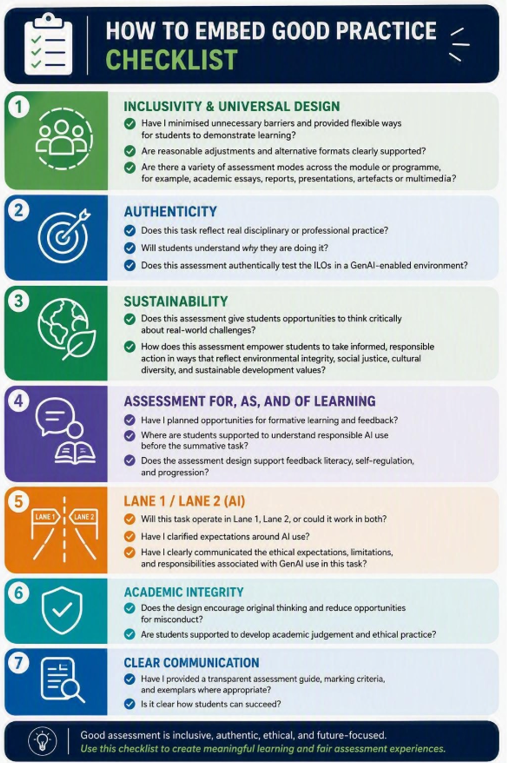
As part of Cardiff University’s transition to Sydney University’s Program level assessment design and the two-lane approach, a new menu will be implemented in September 2027/28. This will introduce a range of assessment types and set out how each method supports inclusivity and authenticity, enables the responsible use of AI, and aligns with Lane 1 or Lane 2 assessment purposes. Student voice will be embedded throughout, alongside illustrative case studies from across the higher education sector and from practice within Cardiff University.
Until then, please refer to the assessment menu below which provides an indicative, non-exhaustive list of some of the different assessment types used commonly in UK higher education. Rather than emphasising comparative pros and cons, the current menu is designed to help Schools and Programme teams make intentional, well-informed decisions about assessment design that align with Cardiff’s Strategic approach to the enhancement of Assessment and Feedback 2023-27 and promote high-quality, future focused assessment across programmes.
Assessment menu

The following Assessment menu is based on Brown, S. and Race, P. 2021 Using Effective Assessment and Feedback to Promote Learning. In Hunt, L. and Chalmers, D. University Teaching in Focus: A Learning-centred Approach. London: Routledge, pp. 135-162.
In-person exams
Traditional, unseen, time-constrained written exams, largely using essay questions.
Exams are a very traditional form of assessment that do not mirror workplace activities, testing what students have memorised; however, it may be argued that exams test students’ abilities to work under pressure.
Academic misconduct and misuse of generative AI may be avoided.
Speed of handwriting and legibility can affect performance; some groups, such as students whose first language is not English, or students who suffer anxiety around exams, will be disadvantaged.
Open-book exams
Students take notes, or electronic devices into an exam.
Less focus on memory and recall, and more focus on what students can do with information provided to them.
More authenticity because students might find themselves needing to analyse and evaluate documents to produce a report in a workplace setting.
The types of notes or texts, or the use students are permitted to make of online resources will need to be planned and clearly communicated. This will also be challenging to monitor.
The same inclusivity considerations largely apply to both traditional and open-book exams (speed of handwriting or typing, English as an additional language, anxiety), but open-book may suit a slightly broader range of needs.
Providing seen texts
Students are given texts ahead of an exam or tight deadline (eg. a week in advance) so that they have time to prepare their responses.
There may be an element of authenticity in that in certain fields, such as law, teaching, or leadership, work may take place under time pressure, with performance outputs such as presentations, lectures or speeches.
Students will have the opportunity to seek help or to collude on preparation.
Students with commitments such as work or dependents may be unfairly disadvantaged.
Essays
Extended written argument, used heavily on humanities courses.
Essays are a largely inauthentic form of assessment because this style of writing is not used in workplace settings outside of academia; however, developing essay writing skills helps students work towards the graduate attribute: ‘independent and critical thinkers’.
Essay writing is traditionally susceptible to contract cheating, and now also to the misuse of generative AI; encouraging alternative ways of supporting students, such as step-by-step writing of sections of an essay to multiple deadlines before summative submission, or peer support through ‘critical friends’ can help to minimise these risks.
Understanding UK academic conventions can be a challenge to some students, and marking criteria or rubrics will need to be clearly explained to them; students with dyslexia, or whose first language is not English may need to be signposted to additional support, or may have reasonable adjustments granted for academic conditions affecting written expression.
Reports
A report may be based on secondary research, but it may also involve original research and fieldwork.
Authenticity: report-writing may be an important skill in future workplace situations, and can support students in the development of the graduate attribute: ‘effective communicators’.
Report writing may be less susceptible to academic misconduct than essays, particularly when original research or a project has been undertaken, or when students work in groups on a report.
If group work is involved in research, how students are allocated to groups and the management of the groups will need to be carefully planned, taking individual needs into consideration.
Give expectations of the structure and language of a report, with exemplars if possible, as some students may not know the components of this form of writing.
Practical/Performance
It is essential in some disciplines to assess students’ practical and performance skills.
Authenticity and confidence-building are clear advantages of performance-based assessments.
There is little risk of academic misconduct in a practical or performance assessment.
Performance on the day can be affected by nerves and anxiety, or circumstantial pressures, and rescheduling may not be straightforward. Enable practice runs before any high-stakes assessment.
Blog/Vlog
Can be used for low-stakes assessment, and for informal collaborative discussion.
A blog/vlog may help students develop a sense of identity and engagement with their discipline, which may help them work towards a sense of professional identity in their chosen field; good practice is allowing an unlimited number of submissions to a forum, with peer as well as tutor feedback through comments, and selection of the best piece for summative assessment.
If blogs/vlogs are posted on an open forum, there is potential for peer plagiarism.
Since blogs are shorter pieces of writing than essays, and language style can be informal, blogs and vlogs can be useful, low-stakes assessments that get students used to the writing or reflection process, and can help to create communities of learning. As with reports, clarify writing structure and style for those not familiar with this type of writing.
Multiple choice questions
Often used for quick testing of factual material.
MCQs are generally an effective way to review understanding and retention of information and seldom support practical or transferable skills.
Multiple choice tests may be highly susceptible to academic misconduct. While a time constraint may help to limit the risks, careful consideration should be given to whether or not speed is a component of the learning outcomes.
Getting students involved in the co-creation of MCQs can be an excellent way to identify gaps in knowledge and understanding, aligning with the principle of assessment as learning.
Short timescales for completion will need to be considered carefully as students with dyslexia or English as an additional language will be disadvantaged by a speed of completion requirement.
Short answer questions
Students produce short answers to large numbers of questions.
The focus may be more on decision-making than on communication and writing skills; this is an important skill in many workplace contexts, such as health care, social work, law, or business.
Academic misconduct and misuse of generative AI may be avoided.
The same inclusivity considerations largely apply to all exam types (speed of handwriting, second language, anxiety), but short answer exams put the focus more on memory and recall than on communication skills.
Computer based tests
Can be used for a wide-range of question types, including drop-down menu selection, drag and drop, clicking points on a diagram etc.
Similar to MCQs, Computer based tests are generally an effective way to review understanding and retention of information. Depending on the subject, students develop and demonstrate a number of transferable skills/attributes such as digital literacy, problem solving, time management and research skills, all relevant to future employment.
Computer based tests may be highly susceptible to academic misconduct, but a time constraint and carefully constructed critical/reflective questions may help to limit the risks.
Digital literacy can vary.
Those with visual impairment or dyslexia, or have mobility issues in relation to mouse use may struggle in speed situations.
Ensure you design accessible features such as font sizes, and colour contrast, to enable screen readers for visually impaired individuals, and keyboard shortcuts for those with mobility challenges to access the material. Follow principles of UDL.
Portfolios
Portfolios may demonstrate evidence of a skillset, or they may be a collection of outputs and reflections.
This may provide students with an opportunity to create a professional portfolio, or a collection of work that may be presented to prospective clients and employers; students may gain a wide range of transferable skills.
Portfolio work can be highly individualised, making it less susceptible to academic misconduct.
Submitting work across a range of modes may allow students to play to their strengths, although this may be overwhelming for some students.
Viva voce
Currently widely used for high-stakes assessment at doctoral and masters levels.
Many careers and professions may depend on face-to-face skills at answering questions and giving persuasive explanations.
There is a case for increased use of oral assessment in conjunction with long-form writing in light of present-day generative AI contexts.
Understanding and accessing questions may be problematic. Consider issues around hearing and/or speech impairment, and anxiety or mental health conditions. Provide questions in advance, and/or allow access to materials or notes, if possible.
Presentations
Individual or group, and to an audience including peers and assessors, using a variety of media (traditional PowerPoint style/poster/business pitch etc.)
Students demonstrate communication skills, alongside core subject knowledge. Presentations skills are useful in future employment. Can be individual or collaborative and provide opportunities for peer-assessment and self-reflection. These skills can help students work towards the graduate attribute; ‘Reflective and resilient’ and ‘Effective communicators’.
Presentations can be conducted in a live or pre-recorded setting. Can be susceptible to genAI use, though if monitored and used appropriately risks can be minimised. The inclusion of the ability to respond to spontaneous questions in the assessment criteria can minimise these risks further.
Usually relies on verbal articulation of ideas in real time disadvantaging those with English as an additional language or speech impairment. Can cause anxiety. Clarify the specific presentation skills being assessed (action and expression). Provide scaffolded formative practice: in pairs/small groups/whole class, with peer and then tutor feedback using assessment criteria. Give options for live or recorded and face to face or online (action and expression).
Posters
Often displayed for peers and assessors in an exhibition; useful to keep as exemplars and for instruction for future cohorts.
Offers opportunity to demonstrate communication skills, alongside core subject knowledge. Students present their work to others and receive rapid feedback from a wider range of people which develop skills required for future employment. Delivering posters help students work toward the graduate attribute: ‘Effective communicators'.
There are limited risks associated with poster assessments.
Relying solely on a visual form can challenge those with visual impairment
Staff may also wish to design a non-visual text version of this assignment with alternative marking criteria, as an alternative assessment.
Projects
Projects are commonly used to help students develop and practise skills relevant to research work.
There is considerable scope through project work for students to work towards the graduate attributes: ‘ethically, socially and environmentally aware’, and, ‘innovative, enterprising and commercially aware’.
Project work often allows for creativity and originality, which may be a check on the use of generative AI.
Projects often involve group work, so how students are allocated to groups and the management of the groups will need to be carefully planned, taking individual needs into consideration.
Dissertation/thesis
Extended written work including in-depth discussion and analysis, generally used at Level 6 and above.
Writing a dissertation or thesis demonstrates an in-depth knowledge of a specific research area where students demonstrate analytical, research, critical thinking and high-level writing skills. Such skills can be relevant to future employment.
Similar to essay writing, dissertations can be susceptible to misconduct and now also to the misuse of generative AI; encouraging alternative ways of supporting students, through effective feedback and guidance on thesis writing is essential here.
Students working towards large scale projects may feel isolated or lonely. Feedback dialogues are important here where face to face guidance and encouragement is essential. Thoughtful consideration should be given to factors such as accessibility, guidance and flexibility.
Simulations
Used in professional disciplines like healthcare to test competence in safe contexts.
These are highly authentic when relating to particular professions and contexts.
These assessments may be relatively resistant to academic misconduct.
Can cause anxiety. Nerves may come into play and affect ‘on the day’ performance. Ensure opportunities for practice and feedback are provided before the summative assessment.
OSCEs (Objective Structured Clinical Examinations)/ISCEs (Integrated Structured Clinical Examinations)
Used in medical education, but can also be used in business, and law.
Regarded as authentic, valid and reliable (eg. Interpreting X-rays, interviewing patients, interpreting case notes, making diagnoses, deciding prescriptions).
These assessments may be relatively resistant to academic misconduct.
Nerves may come into play and affect ‘on the day’ performance. Ensure opportunities for practice and feedback are provided before the summative assessment.
Reflective journals
Reflections may follow a framework, such as Gibbs’ reflective cycle.
Reflective journaling can mirror workplace Personal Development Planning (PDP), where reflection on performance and learning is used to plan future training and career development; supports the development of the graduate attribute: ‘reflective and resilient’.
Reflective journals have been suggested as a way to avoid misuse of AI since they depend on personal experience; however, reflections may not be AI proof. See here for more on this.
Consider allowing both written and oral (video) submission of reflective journals since either format should meet learning outcomes.
Critical incident accounts
Reviewing facts and details of a critical incident.
Critical incident accounts allow students to demonstrate creativity and problem-solving skills, they are authentic and develop skills and attributes required for real world problem solving.
The creativity and problem-solving skills required for critical incident analysis are currently less susceptible to misuse of generative AI.
Creates anxiety
Feedback dialogue and opportunity for practice before the summative assessment is important here.
Assessed seminars
Students’ individual contributions to a seminar are assessed, including interactions with peers, and evidence of preparation, as well as the quality of arguments.
Seminars develop students’ communication skills and the ability to answer questions through group discussion. It provides opportunities for students to demonstrate in-depth knowledge on an element of the curriculum. Seminars help develop students to work towards the graduate attribute; ‘independent and critical thinkers’.
Seminars can be difficult to mark ‘live’ and may be better submitted in a pre-recorded format. Students may rely on genAI in a remote setting to create pre-prepared scripts on a given topic ahead of the assessment.
Students with anxiety, autism spectrum disorder, ADHD, hearing or speech impairments or with English as an additional language may encounter difficulties with this type of oral assessment. Distribution of accessible topics to a large group of students may be challenging.
Annotated bibliography
Summaries of sources with comments on relevance and contributions to research.
As with essays, this type of assessment does not mirror workplace tasks outside of academia.
AI tools can often produce clear and effective summaries of texts.
This may be a very unfamiliar type of assessment to the majority of students, and expectations and process will need to be clearly explained.
In-tray/e-tray exercises
Business simulation exercises requiring decision-making, prioritisation of workload, delegation of tasks and recommendations of action based on emails, company memos, reports etc. See here for more information about how these work.
In-tray exercises are often used by employers as part of the recruitment process, and practice is often provided by university careers services.
This type of assessment is relatively resistant to academic misconduct since it relies heavily on reflection and decision making.
These assessments require working under time pressure with a lot of information to manage and respond to, and may cause high levels of anxiety in some students.
Artefacts
Sculptures, paintings, architectural design, engineering models.
Prepares students with practical applications/skills such producing reports, sculptures, paintings, architectural designs, and engineering models. Producing artefacts helps students work towards the gradate attribute: ‘Innovative, enterprising and commercially aware’.
Producing artefacts can now be susceptible to the misuse of generative AI; encouraging students to demonstrate their ability to use AI tools effectively and critically, and to generate creative solutions can be supported by staff.
Digital literacy can vary so this may cause digital accessibility issues. Though assistive technologies could also promote inclusive and accessible applications for all learners.
Work-based learning
Assessment based on performance in work placements.
Prepares students for challenges they will meet in ‘real life’ scenarios and develop skills such as creativity, flexibility and initiative which traditional assessment methods do not. Responding quickly and effectively in work-based learning contexts helps students work towards the graduate attribute: ‘Independent and critical thinkers’ and Innovative and commercially aware’.
Work based learning assesses both theoretical knowledge as well as the application of skills in practical scenarios which limits opportunity for academic misconduct.
Creates anxiety;
Assessments should be designed with flexibility to accommodate diverse needs, ensuring that all learners can demonstrate their skills and knowledge effectively.
Where next?
Additional Resources and References
The Coronavirus assessment collection – Sally Brown and Kay Sambell 20/21
Armstrong, C.M. (2011). Implementing Education for Sustainable Development: The Potential Use of Time-Honored Pedagogical Practice from the Progressive Era of Education. Journal of Sustainability Education, 2.
Bovill, C. (2020). Co-creation in learning and teaching: the case for a whole-class approach in higher education. Higher Education 79 (1).
Cook-Sather, A., Bovill, C., Felten, P. (2014) Engaging students as partners in learning and teaching: a guide for faculty. San Francisco: Jossey Bass.
Deeley, S. J. (2014) Summative Co-Assessment: A Deep Learning Approach to Enhancing Employability Skills and Attributes. Active Learning in Higher Education 15 (1) 39–51.
Deeley, S. J., & Bovill, C. (2017) Staff-student partnership in assessment: enhancing assessment literacy through democratic practices. Assessment and Evaluation in Higher Education 42(3) 463–477.
Delpish, A, Holmes, A, Knight-McKenna, M, Mihans, R, Darby, A, King, K and Felten, P (2010) Equalizing Voices: Student-Faculty Partnership in Course Design, in Werder C and Otis M (eds) Engaging Student Voices in The Study of Teaching and Learning. Sterling: Stylus.
Denny, P., Luxton-Reilly, A. & Hamer, J. (2008) The Peer-wise system of student contributed assessment questions. Paper presentation, Australasian Computing Education Conference (ACE2008), Wollongong, Australia, January. Conferences in Research and Practice in Information Technology (CRPIT), Vol. 78. Simon and Margaret Hamilton, Eds.
Dijkstra, J., Latijnhouwers, M., Norbart, A., & Tio, R. A. (2016). Assessing the “I” in group
work assessment: State of the art and recommendations for practice. Medical Teacher,
38(7), 675–682. https://doi.org/10.3109/0142159X.2016.1170796
Francis, N.J., Allen, M, and Thomas, J. (2022). Using group work for assessment – an academic’s perspective. Advance HE.
Gordon, N. A. (2010). Group working and peer assessment — using WebPA to encourage
student engagement and participation. Innovation in Teaching and Learning in Information and Computer Sciences, 9(1), 20–31.
https://doi.org/10.11120/ital.2010.09010020
Hanrahan, S. J., & Isaacs, G. (2001). Assessing self- and peer-assessment: The students’
views. Higher Education Research & Development, 20(1), 53–70.https://doi.org/10.1080/07294360123776
Hardy, J., Bates, S.P., Casey, M.M., Galloway, K.W., Galloway, R.K., Kay, A.E., Kirsop, P. and McQueen, H. (2014). Student-Generated Content: Enhancing Learning through Sharing Multiple Choice Questions. International Journal of Science Education 36 (13) 2180–2194.
Herrington, J., Parker, J. & Boase-Jelinek, D. (2014). Connected authentic learning: Reflection and intentional learning. Australian Journal of Education, 58(1), pp. 23–35
Kennedy, G. J. (2005). Peer-assessment in Group Projects: Is It Worth It? In Proceedings of
Australia Computing Education Conference. Newcastle, Australasia.
Landorf, H., Doscher, S., & Rocco, T. (2008). Education for sustainable human development. Theory and Research Education, 6(2), 221-236.
Lejk, M., Wyvill, M., & Farrow, S. (1996). A survey of methods of deriving individual grades
from group assessments. Assessment and Evaluation in Higher Education, 21(3), 267–280.https://doi.org/10.1080/0260293960210306
Mazur, E. (1996). Peer Instruction: A User’s Manual. New Jersey: Prentice Hall.
Meer, N. & Chapman, A. (2015) Co-creation of Marking Criteria: Students as Partners in the Assessment Process, Business & Management Education in HE. Online: https://www.tandfonline.com/doi/full/10.11120/bmhe.2014.00008
Northumbria University (2019). A co-creation approach to strategic enhancement of assessment and feedback in nursing and midwifery: designing assessment support materials with students. Available at: Teaching and Learning Conference 2019: A co-creation approach to strategic enhancement of assessment and feedback in Nursing and Midwifery | Advance HE (advance-he.ac.uk) [Accessed:18 July 2022].
O’Neill, G (Ed) (2011) A Practitioner’s Guide to Choice of Assessment Methods within a Module Dublin: UCD Teaching and Learning https://www.ucd.ie/teaching/t4media/choice_of_assessment.pdf
Pokorny, H., & Warren, D. (2016). Enhancing teaching practice in higher education. London: Sage Publishing Ltd.
Riebe, Linda & Girardi, Antonia & Whitsed, Craig. (2016). A Systematic Literature Review of Teamwork Pedagogy in Higher Education. Small Group Research. 47. 10.1177/1046496416665221.
Sambell, K., and Graham, L. (2011) Towards an Assessment Partnership Model? Students’ Experiences of being Engaged as Partners in Assessment for Learning (AfL) Enhancement Activity. In S. Little (Ed) Staff–Student Partnerships in Higher Education
Shimazoe, J., & Aldrich, H. (2010). Group Work Can Be Gratifying: Understanding & Overcoming Resistance to Cooperative Learning. College Teaching, 58(2), 52–57. https://doi.org/10.1080/87567550903418594
Vygotsky, L. S. (1978). Mind in Society. The development of higher psychological processes. Mind in Society. Cambride, MA: Harvard University Press. https://doi.org/10.1007/s13398- 014-0173-7.2
Whatley, J. (2009). Ground Rules in Team Projects: Findings from a Prototype System to Support Students. Journal of Information Technology Education: Research, 8(1), 161–176. https://doi.org/10.28945/165
Yorke, M., & Knight, P. T. (2006). Embedding Employability into the Curriculum. https://www.qualityresearchinternational.com/esecttools/esectpubs/Embedding employability into the curriculum.pdf. Accessed 21 April 2021