Programme Scoping
Who is this page for?
This page is for colleagues who are leading, supporting or reviewing the development of a new programme, or the significant redesign of an existing one. It may also be useful for professional services colleagues, external partners, students and others who want to understand what good early programme thinking looks like in a UK university context. Advance HE have produced a Framework for Enhancing Student Success in Higher Education which may be useful in your considerations.
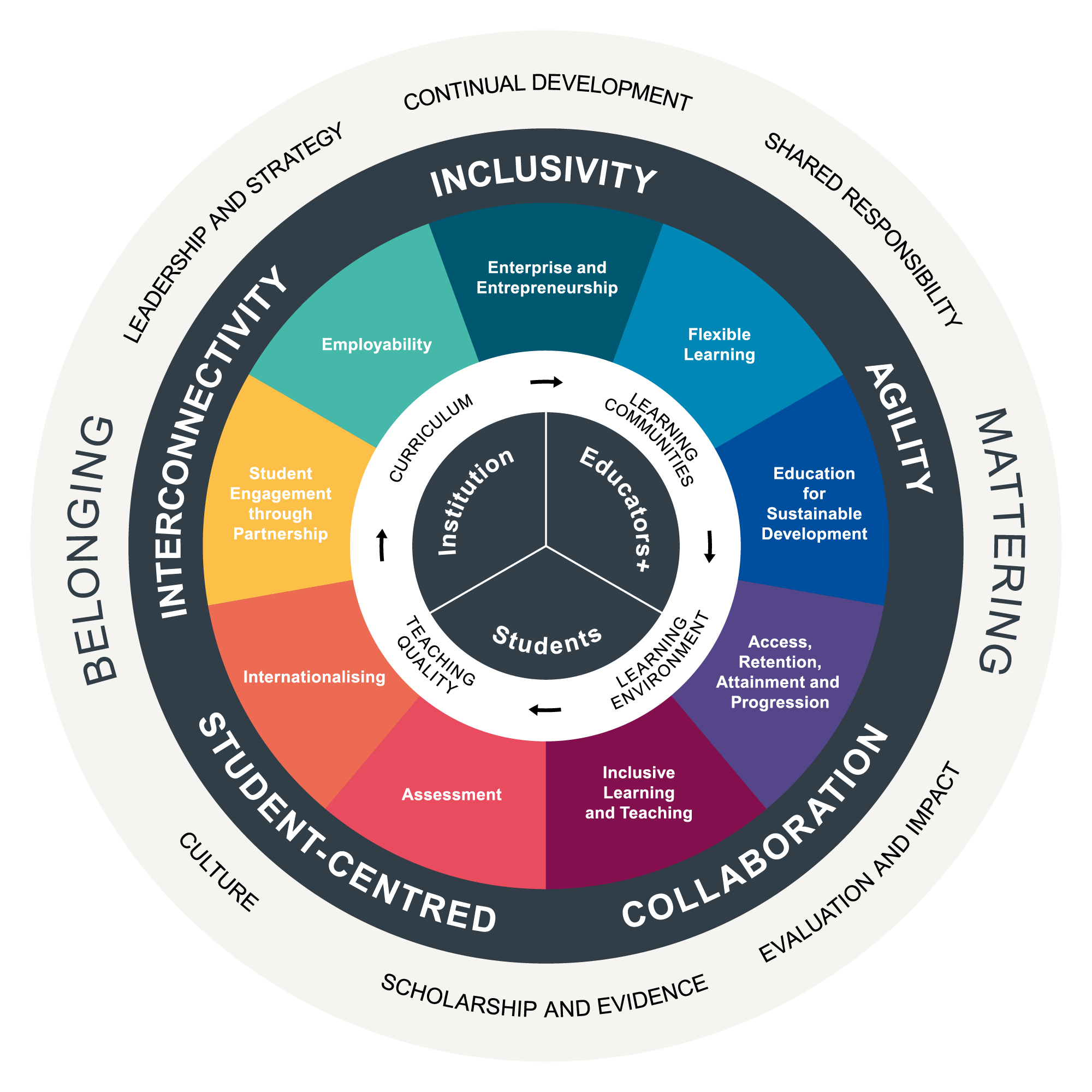
Programme scoping comes before detailed curriculum design. It is the point at which a promising idea is tested: academically, strategically, financially, and practically. The aim is not to write the full programme specification at this stage. It is to decide whether the proposal has a clear purpose, a credible audience, a convincing educational rationale, and a realistic route to delivery.
What programme scoping needs to do

A good scoping exercise should bring together three kinds of evidence: the academic case, the student and market case, and the delivery case. These are connected. A programme may be intellectually strong but difficult to recruit to. It may respond to a clear market opportunity but need more careful thought about level, award, staffing or assessment. It may fit a School’s ambitions but be difficult to explain to applicants or employers.
The strongest proposals usually begin with a simple account of the difference the programme is intended to make. That account should explain who the programme is for, what learners will be able to do by the end, why the award is needed now, and how it fits with the wider subject, professional or social context. This gives the later design work something to hold on to.
Start with the rationale
The first question is not ‘what modules shall we include?’ but ‘why should this programme exist?’ The rationale may come from several places: new knowledge in the discipline, employer or professional need, student demand, changing regulatory or PSRB expectations, research strengths, regional priorities, partnership opportunities, or evidence that an existing programme no longer works as well as it should.
For a redesigned programme, the rationale should be honest about what is working and what needs to change. Student feedback, progression data, recruitment patterns, graduate outcomes, external examiner comments and staff experience can all help to separate long-standing irritation from a genuine design issue. The point is not to defend the current programme or start again for the sake of it. It is to identify the educational problem the redesign is trying to solve.
A useful rationale should be specific enough to guide choices. ‘The sector is changing’ is too broad. ‘Graduates in this field increasingly need to evaluate complex data, work across professional boundaries and communicate uncertainty to non-specialist audiences’ gives the design team something to build around.
Understand the students and the market
Programme teams should test whether there is a realistic and sustainable audience for the programme. This includes applicant demand, competitor provision, likely entry profile, local and international appeal, and the needs of employers, professional bodies or community partners where relevant. UCAS data, postgraduate enquiry patterns, labour market information, competitor websites, open day questions and employer conversations can all be useful, but they need interpretation. The question is not simply whether similar programmes exist. It is whether this proposal has a clear place in the landscape.
Market analysis should also consider how prospective students make choices. Course title, award type, entry requirements, placement opportunities, professional recognition, location, delivery mode, flexibility, cost of living, employability narrative and belonging all shape student decision-making. A programme that is academically coherent but hard to explain will struggle. Scoping should therefore include the language of the offer: what would an applicant, parent, employer or adviser understand this programme to be?
Student voice matters at this stage. Current students and alumni can often see issues that staff have normalised: assessment pinch points, hidden prerequisites, unclear options, weak transitions, unnecessary repetition, or parts of the curriculum that do not feel connected to the programme’s stated purpose. For new provision, prospective students, schools, colleges, employers or professional networks may offer a useful external view. Engagement does not need to be elaborate, but it should be deliberate and proportionate.
Evidence does not need to remove all uncertainty. Programme development always involves judgement, especially where a subject is emerging or the proposed audience is new. What matters is that the judgement is visible and reasonable. A short evidence base might include applicant trends, competitor examples, sector or professional drivers, student or alumni feedback, and a clear explanation of what has been inferred from that evidence. Where the evidence is thin, the scoping case should say so and identify what will be tested before launch.
Design inclusively from the beginning
Inclusive design should not be left until the programme is already built. At scoping stage, teams should consider who the programme is likely to attract, who may be unintentionally excluded, and what assumptions are being made about students’ prior knowledge, time, money, confidence, language, disability, caring responsibilities, commuting patterns or access to technology.
We have a responsibility under the Equality Act 2010 to anticipate the needs of prospective, future students. In addition, one of the goals of the university’s Widening Participation strategy is: ‘To attract and recruit students with academic potential, regardless of background or personal experience’. When scoping a new programme, it is important to pay attention to diversity dimensions and the potential barriers to enrolment for those from under-represented groups, which may be created by the processes, procedures and practices of recruitment and selection. You can read more about these concepts on the Introduction to Inclusive Education page, and in this document from the EHRC (which outlines your legal responsibilities ).
Thus this is partly about legal duties, including the Equality Act 2010 and the need to anticipate barriers. However, more importantly, it is about designing a programme that students can understand, access and succeed within. Entry requirements, placements, fieldwork, laboratory work, attendance expectations, assessment formats and professional requirements should all be considered early, especially where they may create avoidable barriers or require clear communication before application.
Being aware of the diversity dimensions of current students in your School can help to identify areas of disparity, to inform programme design and planning, and to act as a baseline for measurement for future improvements. Cardiff University staff can obtain programme-level data on diversity characteristics through Business Intelligence, under ‘Student Characteristics’.
Inclusive scoping thus also means looking at continuation, attainment and progression, not just recruitment. If an existing programme shows gaps in outcomes between groups of students, the redesign should address the likely causes rather than simply describing the data. If a new programme is being developed, teams should think ahead about belonging, transition, academic skills, feedback literacy, and access to support.
Check the academic shape of the award
Even at an early stage, the programme needs a credible academic shape. The proposed award should align with the relevant qualifications framework, credit level, credit volume and any subject benchmark or PSRB expectations. Programme outcomes should describe the holistic achievement expected of a graduate, rather than a list of module topics. The detailed wording can come later, but the intended level and character of the award should be clear from the start.
It is helpful to sketch the ‘core spine’ of the programme: the essential learning journey that all students must experience. Where there is optionality, the team should be able to explain how student choice will be guided and how different routes still lead to the intended award outcomes. This is particularly important for interdisciplinary, joint honours, flexible, online, apprenticeship, professional or partnership provision.
Scoping should also give early thought to assessment. This does not mean writing every assessment brief. It means asking whether the intended learning can be assessed credibly, whether students will have enough opportunity to practice and receive feedback, and whether the assessment pattern is likely to be manageable for students and staff. If employability, sustainability, research skills, professional judgement or authentic practice are central to the programme, assessment will need to make that visible.
Test deliverability
Good ideas still need resources. Programme teams should be realistic about staffing, specialist expertise, workload, timetable pressure, placement capacity, estates, laboratories, studios, digital infrastructure, library resources, professional services support, marketing, admissions and student support. The question is not only whether the programme can be launched, but whether it can be delivered consistently and improved over time.
Financial sustainability should be considered alongside educational quality. A programme built on very small cohorts, fragile staffing, expensive specialist teaching or uncertain placement supply may be vulnerable even if the academic idea is strong. Equally, a programme designed mainly around recruitment opportunities may not be sustainable if the curriculum, assessment, and student support model are underdeveloped.
Partnerships and external input can strengthen a proposal, but they need clarity. If employers, placement providers, international partners, professional bodies or other Schools are involved, scoping should identify expectations, responsibilities, risks and decision points. Informal enthusiasm is useful; deliverable commitments are better.
Make the programme distinctive
Distinctiveness is not the same as novelty. A programme does not need a dramatic unique selling point, but it does need a clear identity. That identity might come from disciplinary strength, research-led teaching, professional accreditation, regional relevance, placement or project work, flexible delivery, community partnership, international perspective, sustainability, inclusive practice, or a particular combination of knowledge and skills.
The test is whether the programme can be explained simply and honestly: what it is, who it is for, what students will gain, and why they might choose it over other options. If that explanation is difficult, the scoping work probably needs more tightening before detailed design begins.
What should be clear by the end of scoping?
By the end of scoping, the team should be able to explain the academic purpose of the programme, the evidence for demand, the intended student audience, the broad structure of the award, the main inclusive design considerations, the likely resource requirements and the key risks. It should also be clear whether the proposal should move into detailed programme development, be reshaped, or be paused.
This is the value of scoping. It creates enough shared understanding to make a sensible decision before colleagues invest significant time in detailed curriculum design, approval documentation, marketing, or operational planning. Done well, it gives the programme a stronger chance of being coherent, inclusive, sustainable, and genuinely useful to students.
Once the proposal moves into programme development, the emphasis shifts from the broad case to the detailed design. Teams will need to develop the programme learning outcomes, module structure, assessment strategy, student support model and approval documentation. Strong scoping makes that later work easier because the main choices have already been tested. It should leave the development team with a clear direction, not a blank page.
Where next?
Link to other toolkit pages
Once your stage 1 Programme Scoping approval is granted, you will begin Programme Development. Read more on the next ‘Programme Development Page.
You can also read more detail about design principles for ‘Inclusive Design’ module design and using the ABC method in your design, in other pages in this section.
Additional resources and references.
Cardiff University staff can read much more on Programme Scoping and Development on the ‘Approving and Managing Programmes’ intranet pages.