Key Teaching Approaches: Empathetic Pedagogy, Play and Games
This page introduces you to the developments in some key teaching approaches being employed in the Higher Education sector, empathetic pedagogy, and using play and games for learning. It is for anyone who is teaching or supporting students, in any role.
Aligned to PSF: V1, V2, K1, K2, K4, A2
You can develop your understanding of active learning by engaging with our related workshops, Introduction to playful learning and teaching Gamification and Game-based learning and Playing with leadership identity: creative approaches to leading learning. Find out more on the Cardiff LTA CPD page.
Empathetic and Compassionate Pedagogy
Empathy isn’t just a “nice to have” in education, it’s transformative. Empathetic teaching improves student engagement, reduces anxiety and fosters a supportive learning environment (Stratton-Maher 2025). Killingback et al. (2024: 2) argue that while universities have a range of well-being and support services, that these are outside of the pedagogic experience, and thus there is a need to consider that ‘we all have a collective responsibility to promote the wellbeing of students in providing a positive learning environment’.
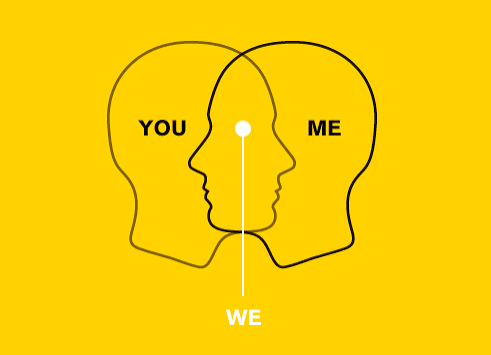
The notion of caring and responsive teaching encompasses teachers engaging in active listening to students, recognising their emotions, and displaying empathy in addressing their needs (Noddings, 1992). This approach significantly contributes to fostering a supportive classroom environment. Teaching with empathy entails acknowledging and appreciating the voices and choices of students in their learning journeys. Offering chances for students to articulate their interests and preferences amplifies both engagement and motivation (Lambert, 2015; Harter, 2012) (Hossain et al. 2024).
Teacher empathy is the degree to which instructors work to deeply understand students’ personal and social situations, feel caring and concern in response to students’ positive and negative emotions, and communicate their understanding and caring to students through their behaviour (Meyers et al. 2019). Teaching with empathy can also teach students to understand and practice their skills in developing empathy. Read this detailed case study from some of our Cardiff University staff, or read their article here.
Play and Games
Playful learning and teaching in Higher Education involves learners being active and approaching a task with curiosity, creativity and joy. Being playful is a state of mind, a way of being and a willingness to try something new, take risks and attempt something difficult where success is not guaranteed.
Quizzes and crosswords are examples of playful approaches which can motivate learners, facilitate social interaction and make useful formative assessment tools.
Game-based learning is an example of a playful teaching approach and involves playing games which can enhance the learning experience, motivate and engage learners and develop skills through problem-solving tasks and challenges. There are many types of games such as board, card, physical, digital/video, table-top role-playing games (TTRPGs) and escape rooms. These resources can help you develop an escape room:
Board games help students make connections between theory and practice, and are useful, interactive platforms for introducing students to difficult and complex topics – mainly because they make the topic more accessible and tangible. Co-creating a new game with students is beneficial or you could ask them to adapt an existing game that links to their discipline to one or more of the 17 UN SDGs.
LEGO SERIOUS PLAY is another type of playful approach which originated in 1996 to tackle challenges in business contexts. The methodology promotes imagination, creativity and solution-based outcomes. For more information refer to The LEGO Serious Play Open Source Resource.
Gamification is a related concept and is the practice of using game design elements, game mechanics and game thinking in non-game contexts to motivate learners. The gaming elements (identified in the taxonomy wheel) are used as a strategy to engage learners and increase the perceived enjoyment of learning.
Toda et.al’s (2019) taxonomy wheel (below) illustrates the various elements of games which can be embedded into learning; these include storytelling/narrative, competition, objectives, points, rewards and leader-boards.

For a longer lecture on Play in Higher Education by Professor Alison James, click here. Or watch this short video by Dr Alyson Lewis to find out about other professional development opportunities and how you can get involved with a thriving community to develop your practice – to open in a browser, click here.
Where Next?
Links to other toolkit pages
Our three key areas of focus for Inclusivity: Fostering a Sense of Belonging, Empowering Students to Fulfil their Potential and Developing Inclusive Mindsets can be found in the Inclusivity section of the Themes tab. You will also find inclusivity considerations in our ‘Teaching Resources Toolkit, on the next page. Link to other toolkit pages.
Additional resources and references
Hossain, Ataur & Khan, Wasim & Sarkar, Raju. (2024). Empathy In Educational Practices: Perspectives From Higher Education In West Bengal. IOSR Journal of Humanities and Social Science. 29. 1-6
Killingback, C., Tomlinson, A., & Stern, J. (2024). Compassionate pedagogy in higher education: A scoping review. Journal of University Teaching and Learning Practice, 21(10). https://10.53761/7yvrw787
Meyers, S. Rowell, B., Wells, M. and Smith, B.C. 2019.Teacher Empathy: A Model of Empathy for Teaching for Student Success. College Teaching: 67: 3, pp160–168
Stratton-Maher, D. 2025. Teaching with empathy: a practical guide for university educators (Online). Available at: https://www.timeshighereducation.com/campus/teaching-empathy-practical-guide-university-educators